
You’re considering Indonesia as your next digital nomad destination, and the process just got simpler. With a $2,000 monthly income requirement and tax exemptions for six months, this tropical paradise offers an attractive option for remote workers.
You’ll need specific documentation and must follow strict guidelines about income sources. But what happens after your initial visa period ends? The answer might surprise you.
Key Takeaways
Foreign remote workers can apply online for Indonesia’s Digital Nomad Visa, which allows stays of up to five years. This visa is designed to accommodate those looking to work remotely while enjoying the beauty of Indonesia.
To qualify, applicants must show proof of a monthly income exceeding $2,000 from non-Indonesian sources. Additionally, a passport valid for at least 18 months is required for the application.
The application process incurs a fee of $100 and necessitates detailed documentation. All submissions must be made through the Immigration Ministry’s website.
Visa options include 6-month, 1-year, or 2-year durations, allowing applicants to choose based on their intended stay.
The Digital Nomad Visa also offers a 183-day tax exemption on foreign income and grants legal status for remote work activities in Indonesia.
Yes, Since 2022!
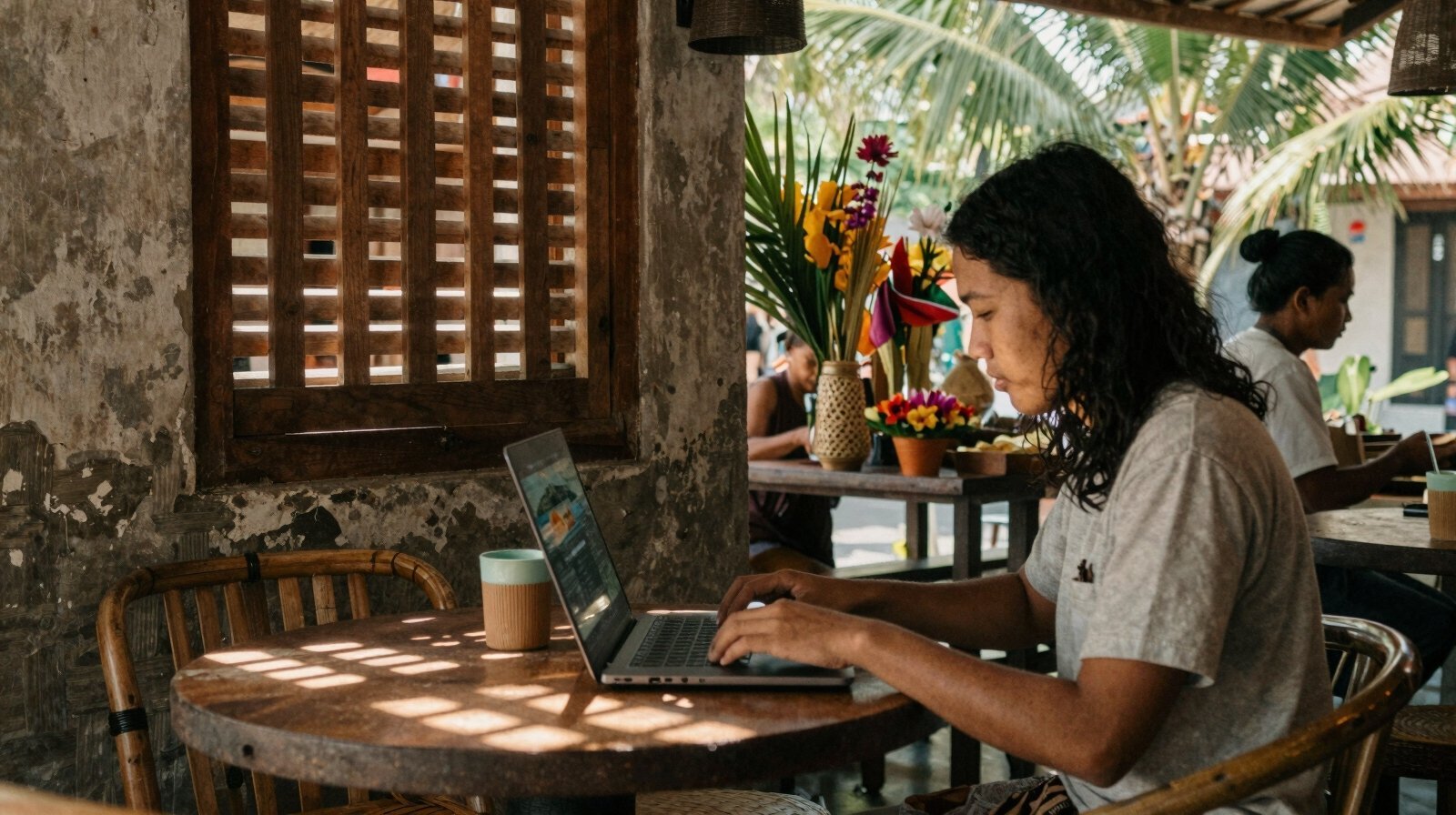
While many digital nomads have been visiting Bali for years, Indonesia only officially launched its digital nomad visa in 2026.
This move signaled Indonesia’s recognition of the digital nomad lifestyle and its economic benefits.
The visa allows remote workers to stay in Indonesia for up to five years—far longer than the typical tourist visa.
You’ll enjoy Indonesia visa benefits such as legal status while working remotely, access to banking services, and the ability to rent long-term accommodations.
Before 2026, digital nomads operated in a legal gray area, often doing visa runs.
Now, you can fully embrace island life without immigration concerns.
-Month Tax Exemption
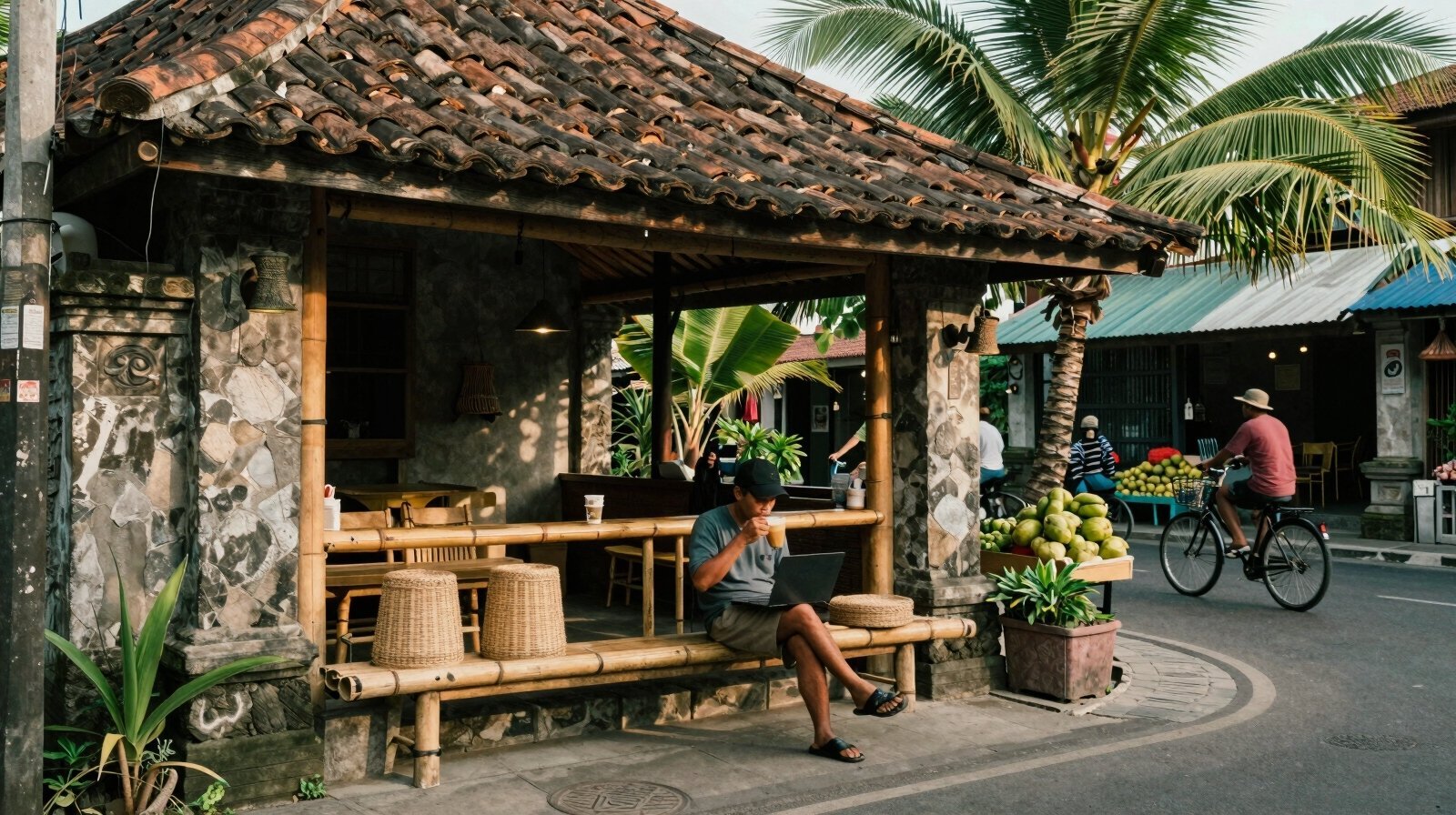
One of the most appealing aspects of Indonesia’s digital nomad visa is the 183-day tax exemption period. During this time, you won’t be subject to Indonesian tax obligations on your foreign income for up to six months of your stay.
| Benefit | What It Means | Why You’ll Love It |
|---|---|---|
| 183 Days Tax-Free | No Indonesian taxes on foreign income | More money in your pocket |
| Simple Tax Residency Implications | Avoid double taxation concerns | Peace of mind while working |
| Minimal Income Reporting Requirements | Less paperwork burden | Freedom to focus on your work |
It’s important to consult with a tax professional regarding your specific situation. Tax residency implications can differ based on your home country’s regulations.
Tropical Co-Working Paradise
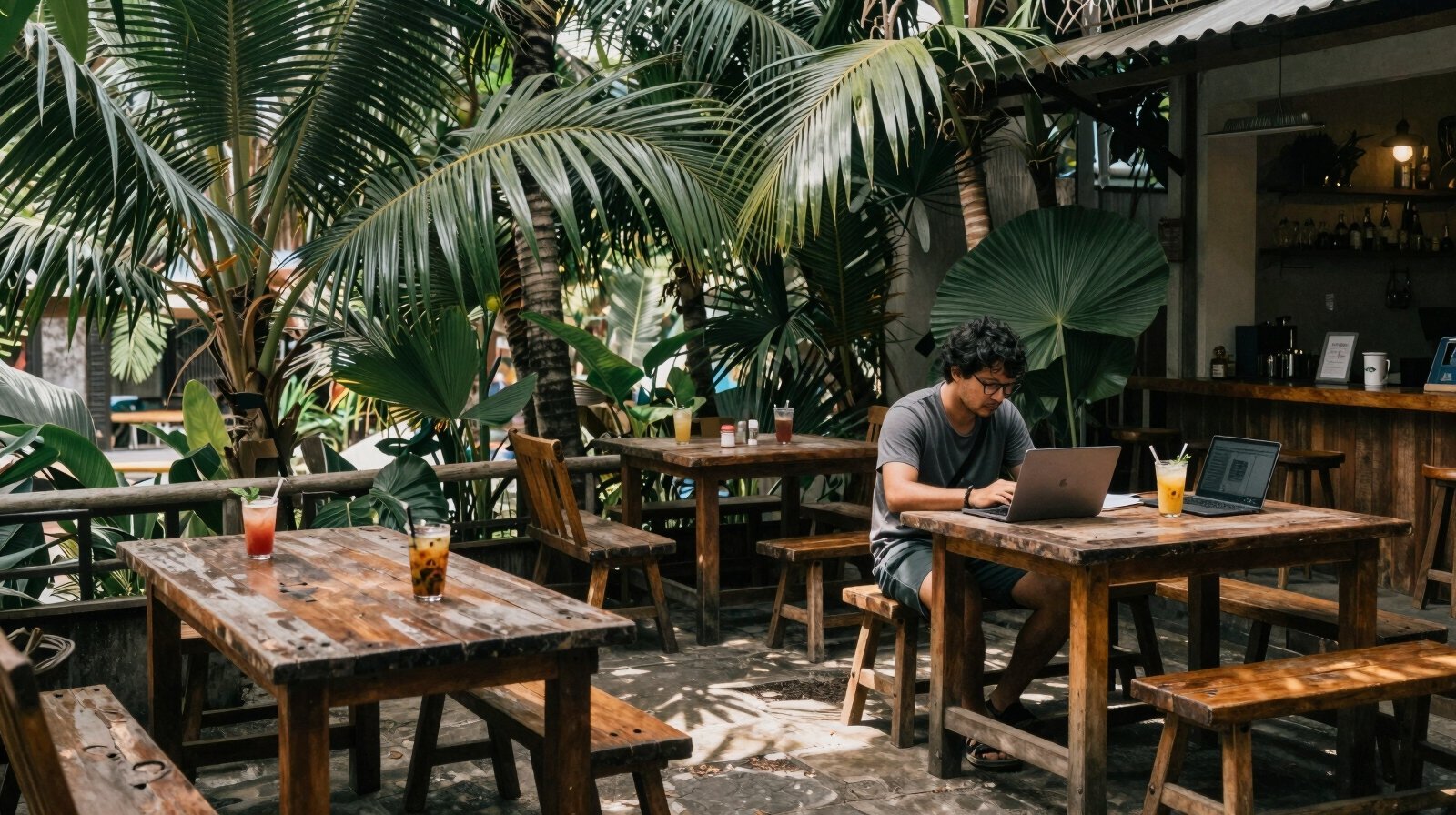
Beyond tax benefits, Indonesia offers digital nomads an unmatched working environment that seamlessly combines productivity with paradise.
Choosing Indonesia as your remote work destination reveals the ideal balance of island lifestyle. The country’s tropical coworking spaces offer professional amenities set against breathtaking scenery.
Bali stands out with its world-class coworking hubs, featuring high-speed internet, vibrant networking events, and stunning ocean views. Coworking spaces in Indonesia also promote a supportive community, fostering genuine connections through various events and workshops.
Emerging islands like Lombok and Flores provide boutique spaces with fewer crowds, perfect for those seeking a quieter work atmosphere.
Many facilities also include wellness programs, ensuring you maintain a healthy work-life harmony in this tropical paradise.
This thriving working ecosystem makes Indonesia an irresistible choice for remote professionals in search of inspiration alongside functionality.
Foreign Remote Workers Only
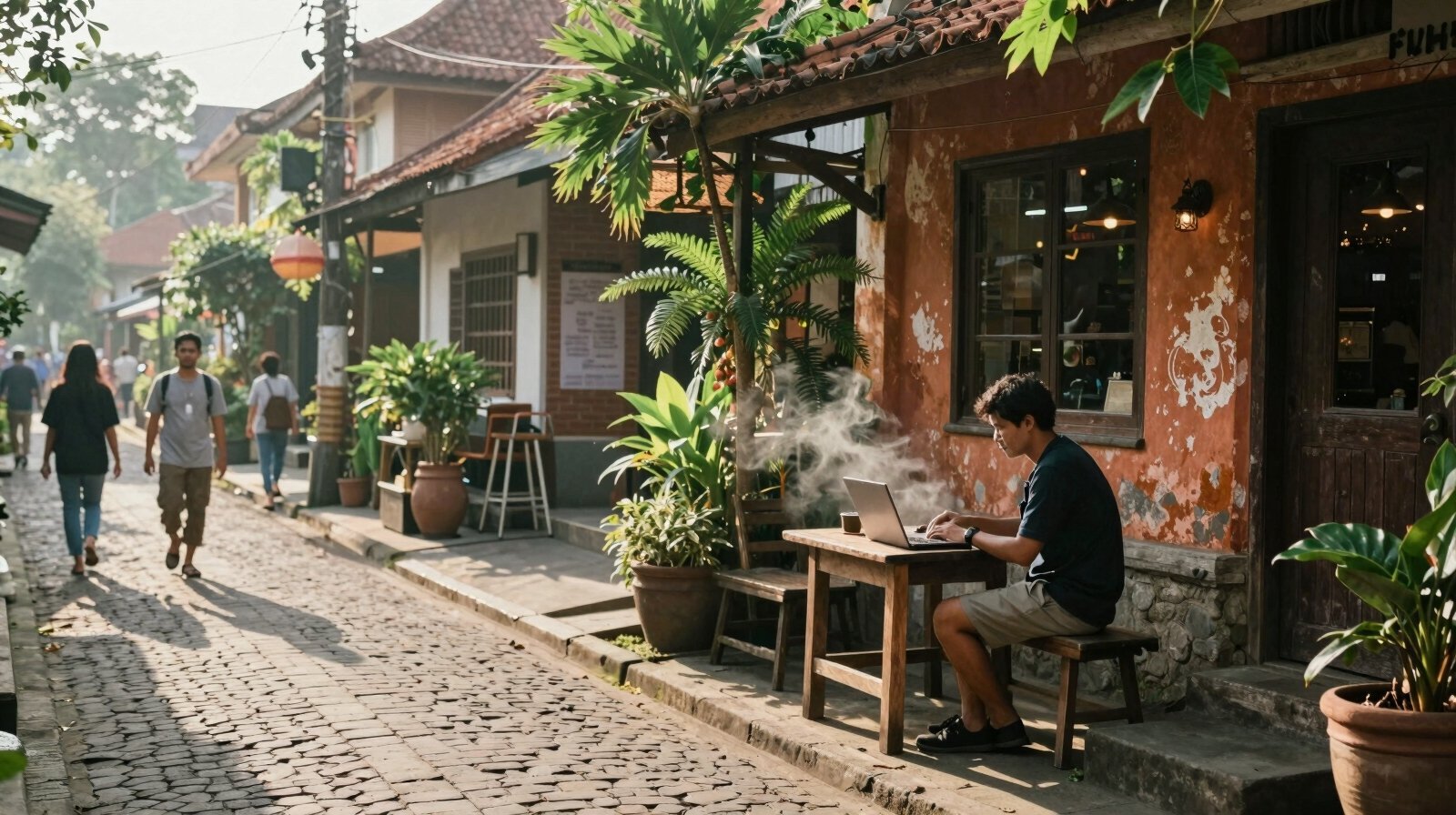
Unlike tourist visas or business permits, Indonesia’s digital nomad visa specifically targets foreign remote workers with location-independent income sources.
To qualify, you must demonstrate that your income comes from outside Indonesia. This approach preserves opportunities for locals while allowing you to enjoy the benefits of remote work in paradise.
To qualify, you need to confirm that you meet the following requirements:
- Proof of employment or business ownership based abroad.
- A minimum monthly income (typically $2,000) from non-Indonesian sources.
- A valid passport with at least 18 months remaining validity.
This visa creates a sustainable ecosystem where you can thrive while engaging in international networking opportunities with fellow digital nomads.
Best of all, you won’t be competing directly with Indonesia’s domestic workforce.
Documentation You’ll Need
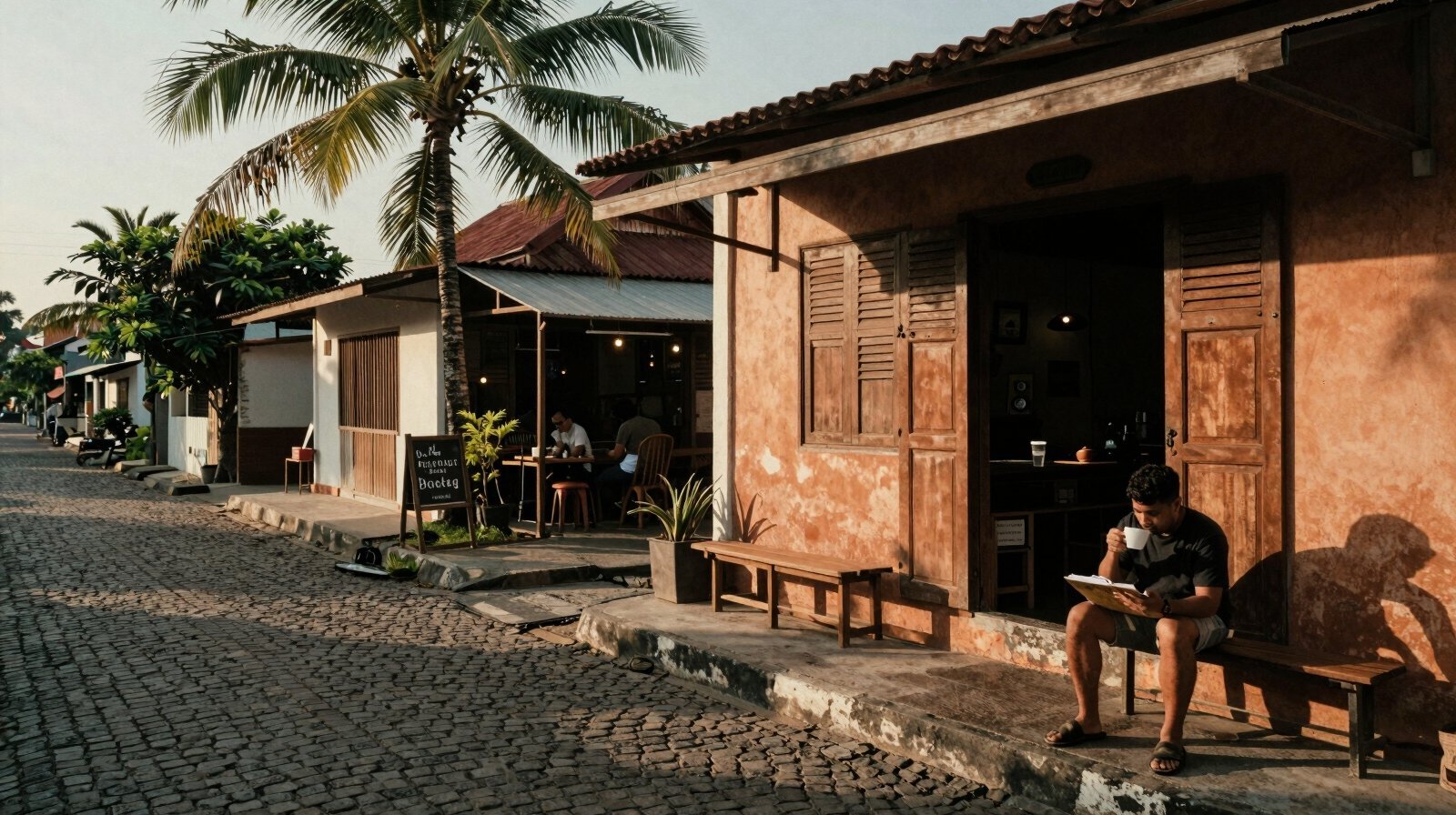
Preparing your documentation is the most meticulous part of applying for Indonesia’s digital nomad visa. You’ll need to gather several necessary documents before submitting your application forms.
The process requires attention to detail, but having everything organized will save you time.
Make sure you have a valid passport with at least 18 months remaining validity. Additionally, you’ll need proof of remote employment or business ownership.
Bank statements showing sufficient funds (minimum $2,000/month) are also required.
Don’t wait until the last minute to collect these items. Indonesian immigration officials review applications carefully, and missing documentation will delay your approval.
Ensure everything is in order well before your intended application date.
60-100 per Application
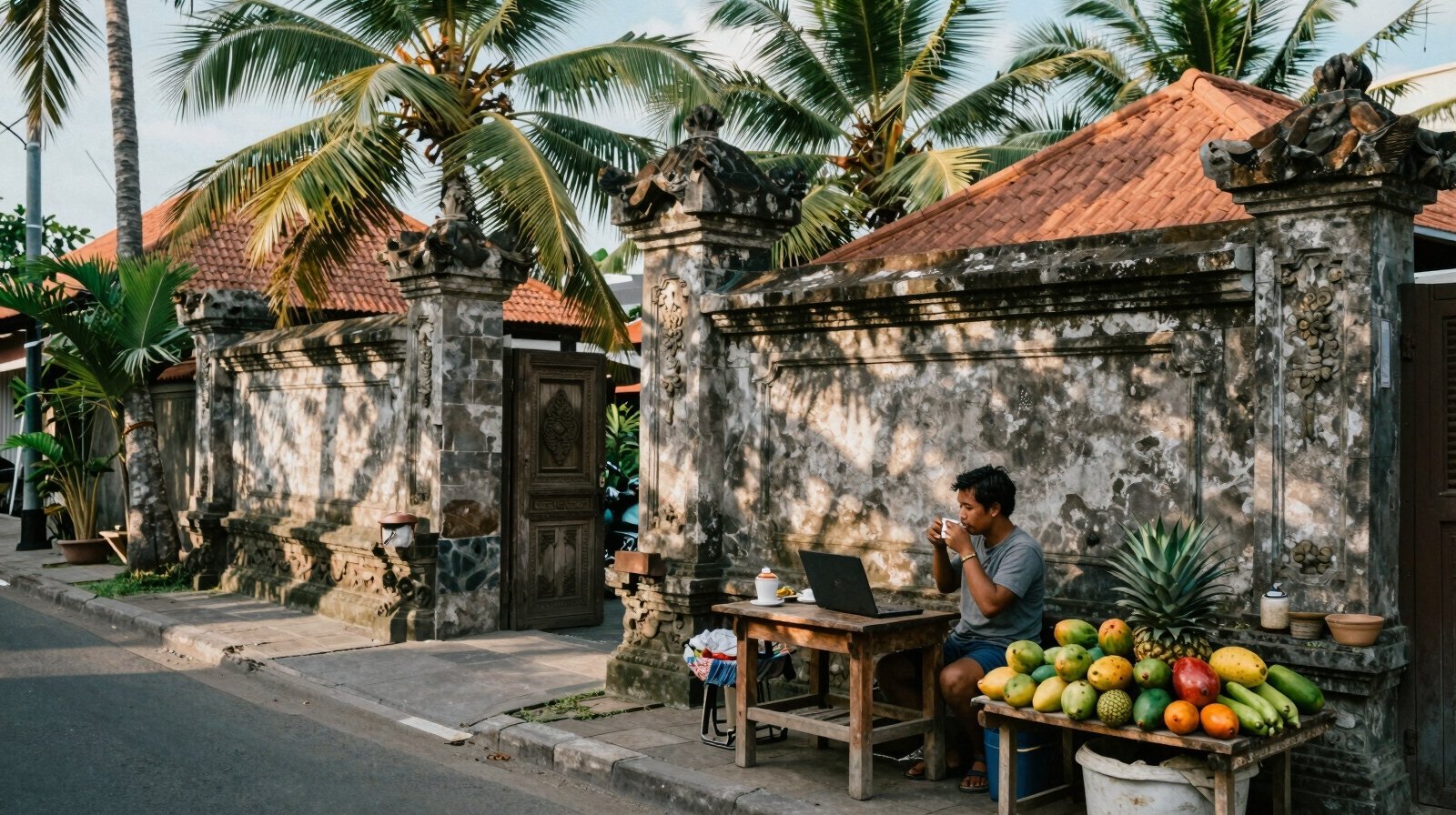
The application fee for Indonesia’s digital nomad visa is a straightforward $100 per submission. This makes it one of the more affordable options compared to similar programs in Southeast Asia.
This fee covers your entire application process and remains the same regardless of the approval outcome. Payment must be made via bank transfer to the Indonesian Immigration Department before you submit your documents.
Be sure to keep your payment receipt, as you’ll need to upload it during the application process.
While additional fees may apply for dependents or extensions, the initial $100 investment offers tremendous value considering the visa’s duration and benefits.
Bali’s Vibrant Nomad Hubs
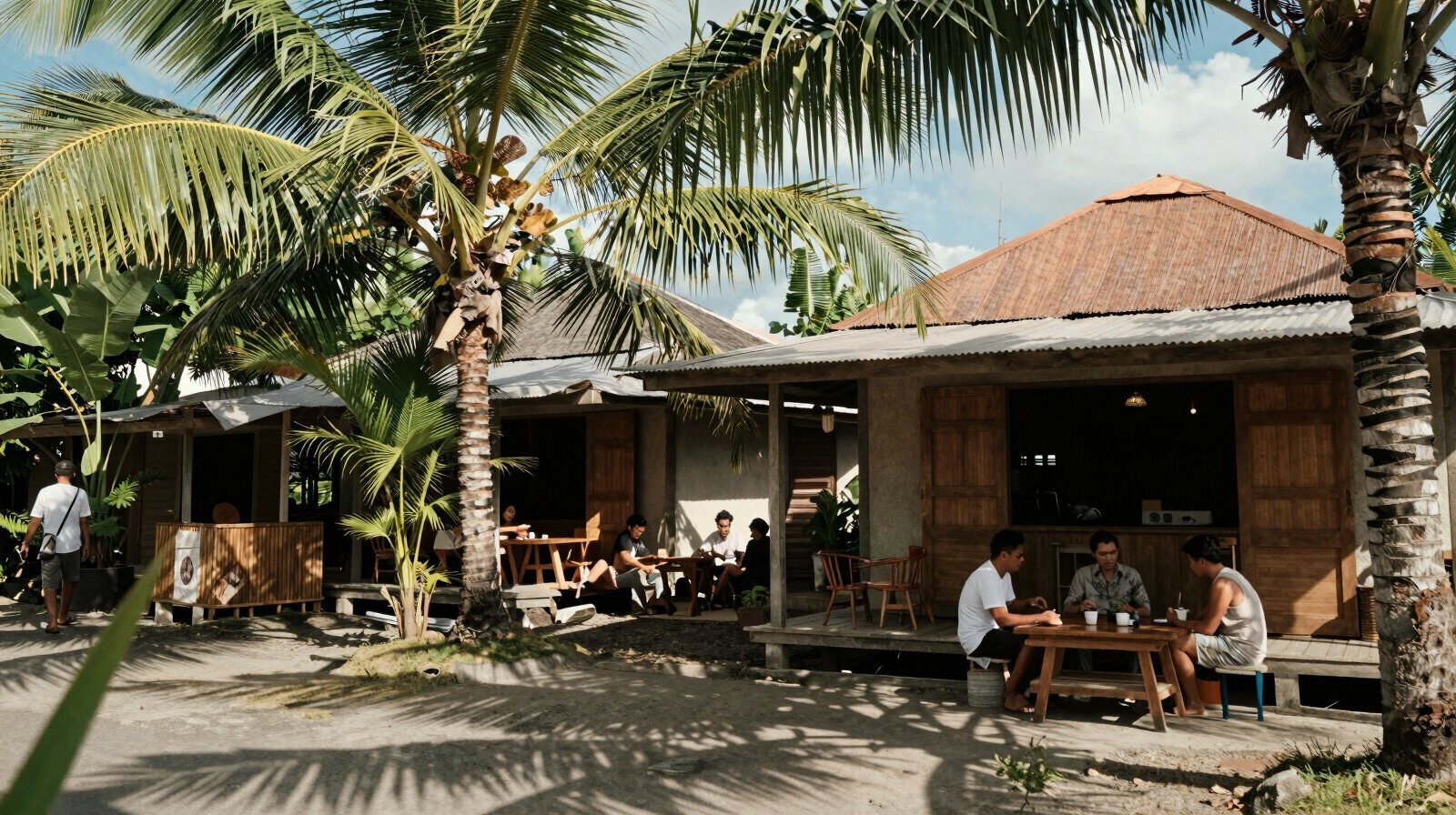
While Indonesia boasts various destinations for digital nomads, Bali stands as the undisputed hub for remote work culture in the country.
Thriving hotspots like Canggu, Ubud, and Uluwatu showcase a coworking culture that has transformed into vibrant ecosystems.
Many coworking spaces regularly host nomad community events, ranging from skill-sharing workshops to networking mixers.
These gatherings offer valuable opportunities to connect with like-minded professionals and potential collaborators.
What truly sets Bali apart isn’t just its infrastructure, but the community itself—international, creative, and supportive.
You’ll easily find your tribe through Facebook groups or weekly meetups.
Online Form Submission Required
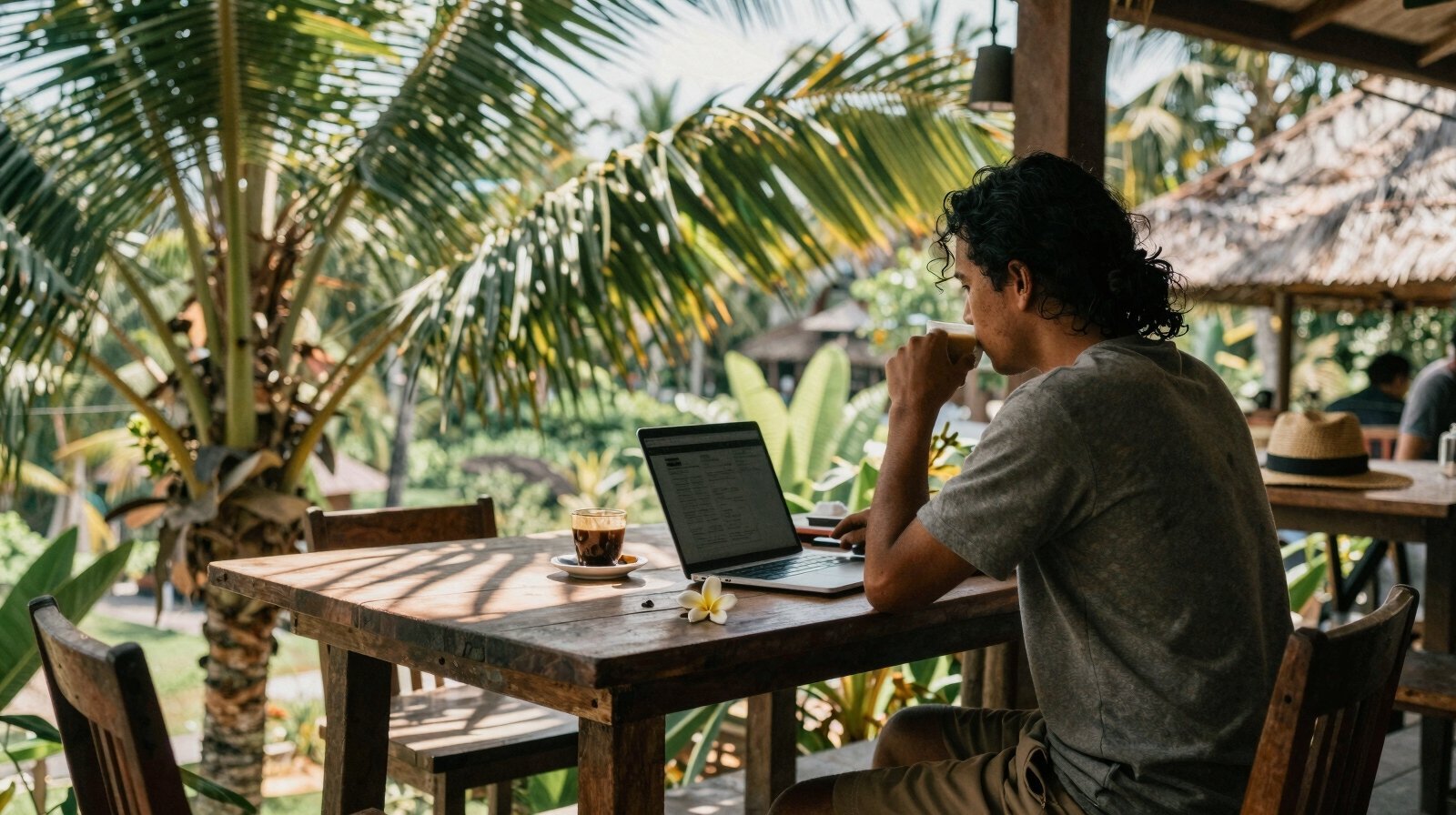
How exactly do you kick off your digital nomad journey to Indonesia? It all starts with the online application process on Indonesia’s immigration website.
You’ll need to complete a detailed form that requires your passport information, travel history, and proof of income. The online application system guides you through each section and flags any missing information before submission.
Don’t rush through the form requirements—accuracy is crucial. Upload clear scans of your passport, recent photos, and bank statements showing sufficient funds.
Double-check everything before hitting submit, as corrections afterward can delay your application considerably.
No Cryptocurrency Work Allowed

One important restriction you’ll face after completing your online application is related to cryptocurrency work.
Indonesia’s digital nomad visa explicitly prohibits any employment related to cryptocurrency trading, mining, or development.
This limitation arises from Indonesia’s strict regulations on cryptocurrency, which aim to control financial activities within the country.
While you can still pursue most remote work, these specific restrictions may be a dealbreaker if your income relies on blockchain projects.
Before applying, take a moment to honestly assess whether your work falls under these prohibited categories.
The authorities conduct thorough reviews of applications and may reject yours if they suspect any involvement with cryptocurrency, potentially wasting your time and application fees.
Second-Home Tax Benefits
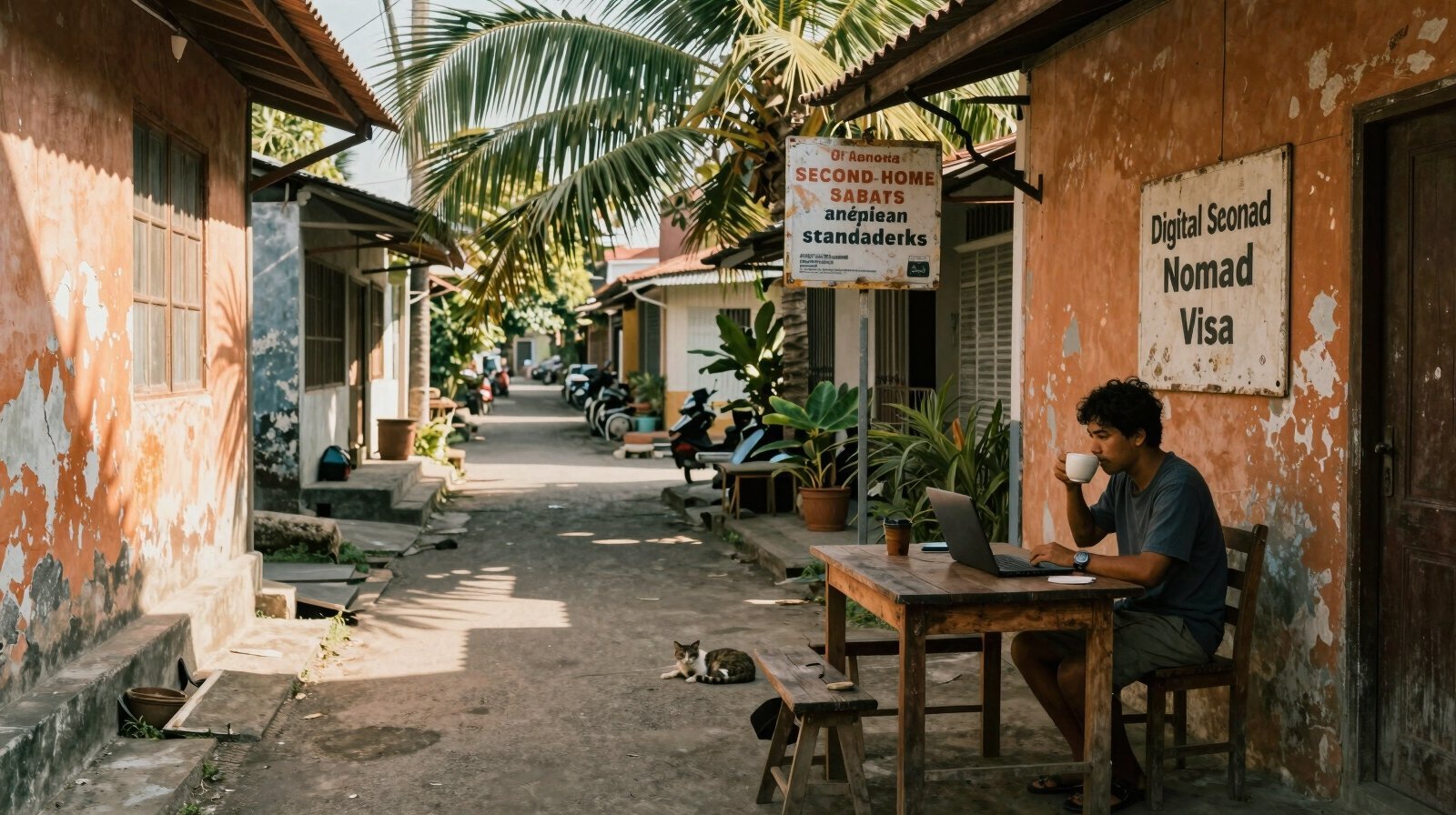
Among the many perks of Indonesia’s digital nomad visa, potential tax advantages stand out for long-term travelers.
When you establish Indonesia as your second home, significant tax benefits await if you stay for at least 183 days per year.
These second home benefits may include avoiding double taxation through Indonesia’s agreements with over 65 countries.
The tax implications can be substantial—you’ll likely only pay Indonesian taxes on your foreign income, which may be lower than your home country’s rates.
Indonesia Immigration Ministry Website
When applying for Indonesia’s digital nomad visa, the official Immigration Ministry website is your primary resource. This site provides essential information, including application forms, fee structures, and processing timelines.
It’s a good idea to bookmark the website and check it regularly for visa updates, as requirements can change without much notice. The site offers English language options, although some sections may only be available in Bahasa Indonesia.
If you encounter any technical issues, the website provides contact information for direct assistance.
Utilizing these official resources ensures you’re working with current information rather than relying on potentially outdated third-party advice.
Frequently Asked Questions
As you research Indonesia’s digital nomad visa, you may have practical questions about the logistics of your potential stay.
You might be curious about visa duration options, which can last up to 2026 with possible renewals.
Internet reliability is another key concern, especially across different islands.
Additionally, it’s important to consider monthly living costs, the extension process, and your tax obligations as a foreigner.
Let’s address these common concerns to help you plan your remote work experience in Indonesia.
Visa Duration Options
Since I’ve received countless messages about Indonesia’s digital nomad visa timeframes, let me clarify your options.
Indonesia offers remarkable duration flexibility with their digital nomad visa program.
You’ll have three primary visa options: a 6-month visa (best for seasonal workers), a 1-year visa (ideal for most nomads testing the waters), and a 2-year visa (perfect if you’re committed to making Bali your long-term base).
Each option requires slightly different documentation, but all allow multiple entries.
The longer visas offer better value financially, though you’ll need to demonstrate more substantial income and savings.
Internet Reliability Reality
Beyond choosing your ideal visa duration, you’ll need dependable internet to make your digital nomad life work in Indonesia. The reality varies dramatically by location.
Bali’s tourist areas offer decent internet speeds, typically between 20-50 Mbps, while remote islands often struggle with basic connectivity.
Prepare for connectivity challenges. You might face unexpected outages during rainy seasons and experience inconsistent performance even in developed areas.
To mitigate these issues, I recommend having backup options, such as a portable hotspot, a local SIM with a generous data plan, and knowledge of reliable coworking spaces nearby.
Always test connections before important meetings. Indonesia’s internet infrastructure is improving, but it remains unpredictable compared to digital nomad hubs like Singapore.
Monthly Cost Expectations
Many prospective digital nomads ask me about Indonesia’s living costs, and this is a crucial factor to consider before making the move.
In my experience, you’ll need between $1,000 and $2,500 monthly, depending on your lifestyle choices. Bali tends to be on the higher end compared to other regions.
Here’s a basic cost breakdown: accommodation ranges from $300 to $700, food costs between $200 and $400, transportation is around $50 to $100, and internet typically falls within $30 to $50.
For budget-friendly tips, consider renting monthly to secure discounts, eating at local warungs, and using Gojek for transportation.
If you’re open to it, remote villages can offer significantly lower costs, albeit with fewer conveniences.
Visa Extension Process
Now that we’ve covered the financial aspects of living in Indonesia, let’s address one of the most common concerns I hear from fellow nomads: visa extensions.
The extension process is straightforward if you’re prepared. Submit your application at least seven days before your current visa expires.
Key extension requirements include your passport, which must be valid for at least six months, proof of accommodation, and a payment receipt for the extension fee.
My top visa renewal tip: don’t wait until the last minute. Immigration offices can get crowded, especially in popular areas like Bali.
Consider using an agent for a hassle-free process.
Foreigner Tax Obligations
While settling into your digital nomad lifestyle in Indonesia, it’s essential to understand your tax obligations to avoid unexpected complications. Your tax residency implications largely depend on how long you stay in the country.
| Status | Requirements | Tax Liability | Foreign Income Reporting |
|---|---|---|---|
| Non-resident | Stay < 183 days/2026 | Only Indonesian income | Not required |
| Tax resident | Stay ≥ 183 days/2026 | Global income | Required annually |
If you become a tax resident, you’ll need to report your foreign income. Most digital nomads prefer to maintain non-resident status to simplify their obligations, but it’s wise to consult with a local tax professional to ensure compliance with regulations.
Summary
You’re now ready to pursue your digital nomad dreams in Indonesia. With a $2,000 monthly income requirement and proper documentation, you’ll enjoy tax exemptions and access to tropical co-working spaces.
Remember, the visa is exclusively for foreign remote workers and does not permit cryptocurrency work. To qualify, you’ll need to maintain valid employment abroad.
Before submitting your $100 application, be sure to check Indonesia’s Immigration Ministry website for up-to-date information.