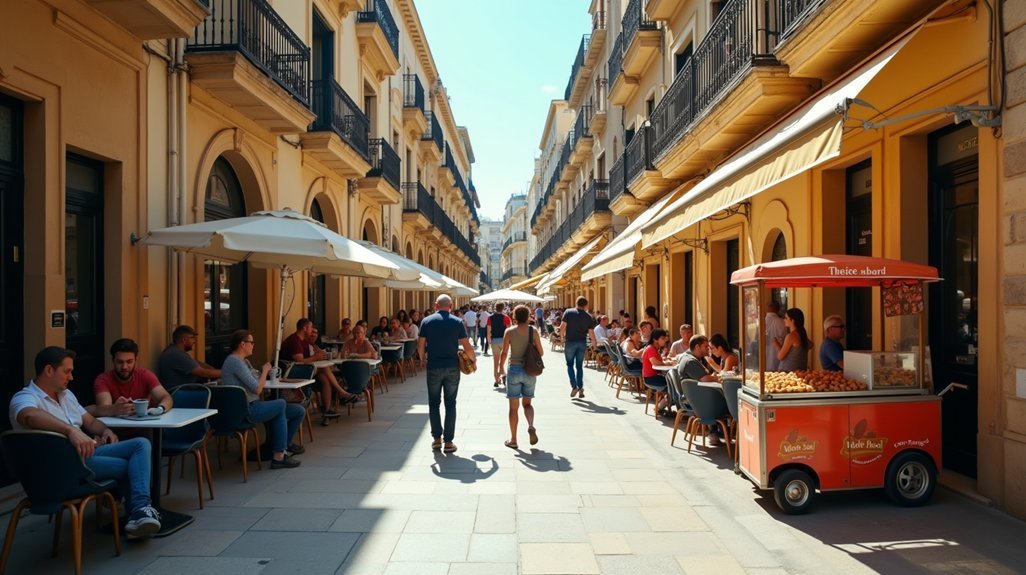
Paradise sells itself—but paradise with reliable Zoom calls, upload speeds over 25 Mbps, and a decent coworking desk? That’s harder to find across Hawaii’s islands. If you’re planning a remote work stint in Hawaii, you’ve probably spotted the disconnect: Oʻahu dominates for consistent internet and coworking infrastructure (Honolulu averages 48 Mbps with spots hitting 296 Mbps), while Maui, Big Island, and Kauaʻi win on slower-paced vibes and nature—but demand extra homework on connectivity.
I’ve pulled together real nomad experiences from Reddit threads, Nomad List data, and local Hawaii forums to answer the question honestly: where should you actually base yourself to work remotely in Hawaii? You’ll get a clear “best overall” (spoiler: Honolulu if reliability matters), plus “best for” breakdowns—whether you’re chasing surf-then-cowork mornings on North Shore, quiet focus on Kauaʻi, or Big Island’s space without sacrificing town hubs.
What “Best” Actually Means for Remote Workers in Hawaii
Before you fall for sunset Instagram shots, run through these five non-negotiables that separate workable Hawaii bases from vacation spots masquerading as nomad havens.
The Must-Check List:
- Internet reliability: Minimum 25 Mbps upload for calls; Oʻahu delivers 300 Mbps Ethernet in some Airbnbs, but rural Big Island and Kauaʻi can hit DSL-only zones
- Power backup plan: Brownouts happen; coworking spaces like Hub Coworking Hawaii include generator-backed 1GB fiber
- Noise control: Unit orientation (avoid highway-facing), AC hum, and desk ergonomics matter for 6+ hour stretches
- Backup workspace: Your Airbnb flakes? Have a café or coworking day pass queued (Hanalei Bread Co. on Kauaʻi, BoxJelly in Honolulu)
- Commute simplicity: Car-dependent islands mean factoring $40–80 airport Ubers and grocery runs into your rhythm
Scoring Framework (1–5 scale):
Use this to weight your priorities. Oʻahu scores 5/5 on work infrastructure and 4/5 on community, while Kauaʻi flips to 5/5 nature and 2/5 infrastructure.
| Criteria | What It Covers |
| Work infrastructure | Coworking density, café WiFi backup, internet speed consistency |
| Community/networking | Nomad groups (WhatsApp, hostels), events, critical mass of remotes |
| Cost control | Airbnb monthly rates, grocery access, free beach “office” alternatives |
| Nature access | Surf breaks, hikes, snorkel spots within 20-min reach |
| Transportation simplicity | Walkability vs. car rental necessity, parking hassles |
Island Verdicts: Where Each One Wins (and Loses)
Hawaii’s four main islands split into infrastructure-first (Oʻahu) versus lifestyle-first-with-planning (Maui, Big Island, Kauaʻi). Here’s the honest breakdown before we go granular by town.
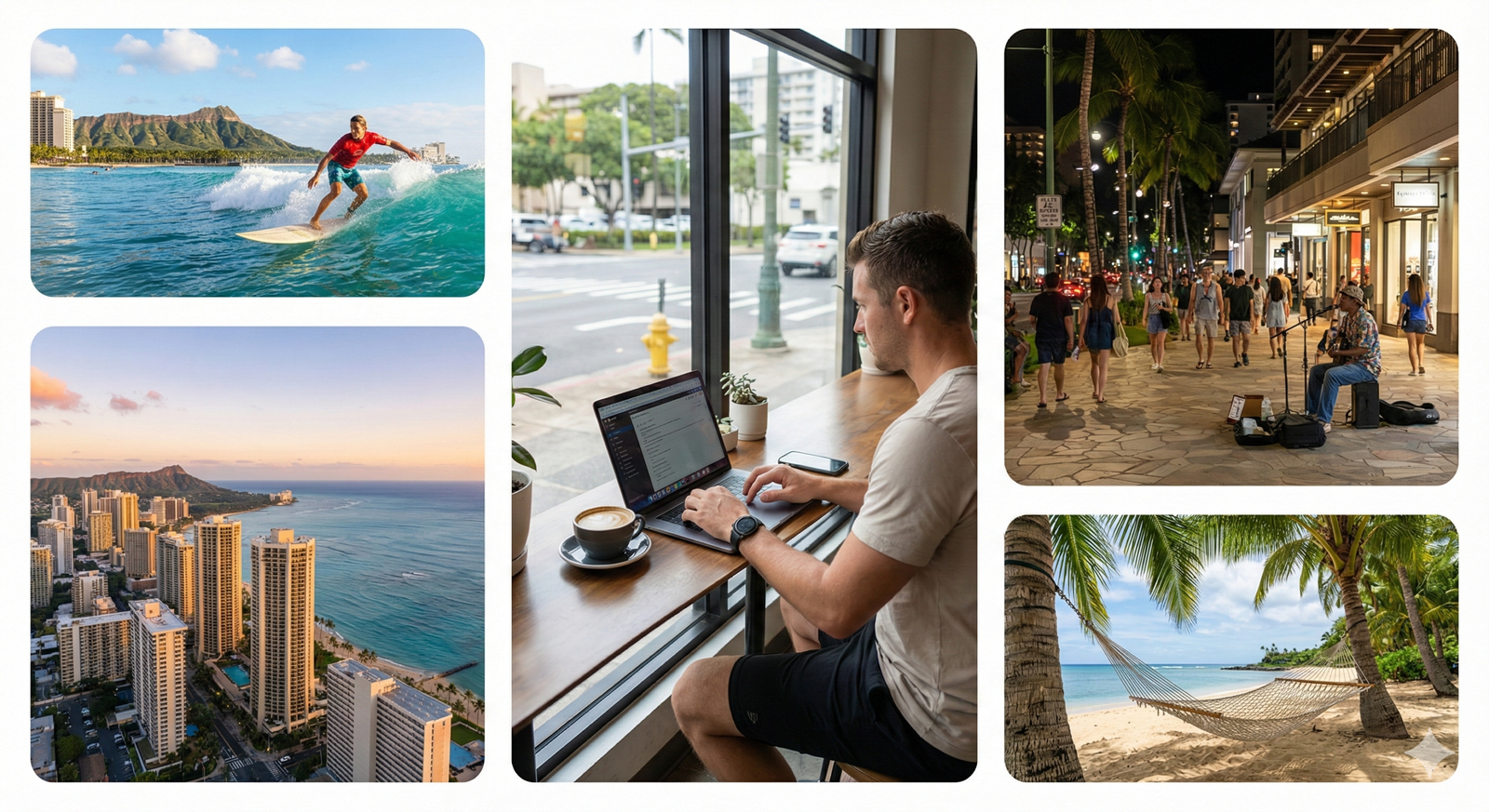
Oʻahu: The Safe Bet for Coworking and Connectivity
Honolulu and Kakaʻako anchor Hawaii’s strongest nomad ecosystem—BoxJelly, Hub Coworking, and The Box Jelly offer 100+ Mbps uploads, backup generators, and WhatsApp networking groups. Reddit consensus: “Oʻahu has the best internet; other islands are hit or miss with DSL outside main towns”. Monthly costs hit $6,537 on Nomad List, but Airbnbs in Honolulu run $2,000–3,000 for solo nomads with high-speed included. If you need daily calls and zero guesswork, start here. Want even more details on living in Oahu? Read our complete Oahu Travel Guide for Digital Nomads.
Oʻahu Strengths:
- Coworking density (10+ spaces in Honolulu alone)
- Walkable Waikīkī/Ala Moana for groceries, cafés, and services
- North Shore option blends surf culture with Outsite coliving in Sunset Beach
- Largest nomad community via hostels like HI Honolulu and digital nomad meetups
Oʻahu Tradeoffs:
- Urban density means traffic (H-1 gridlock) and less “remote island” mystique
- Waikīkī can feel touristy; you’ll want to explore Windward Coast for balance
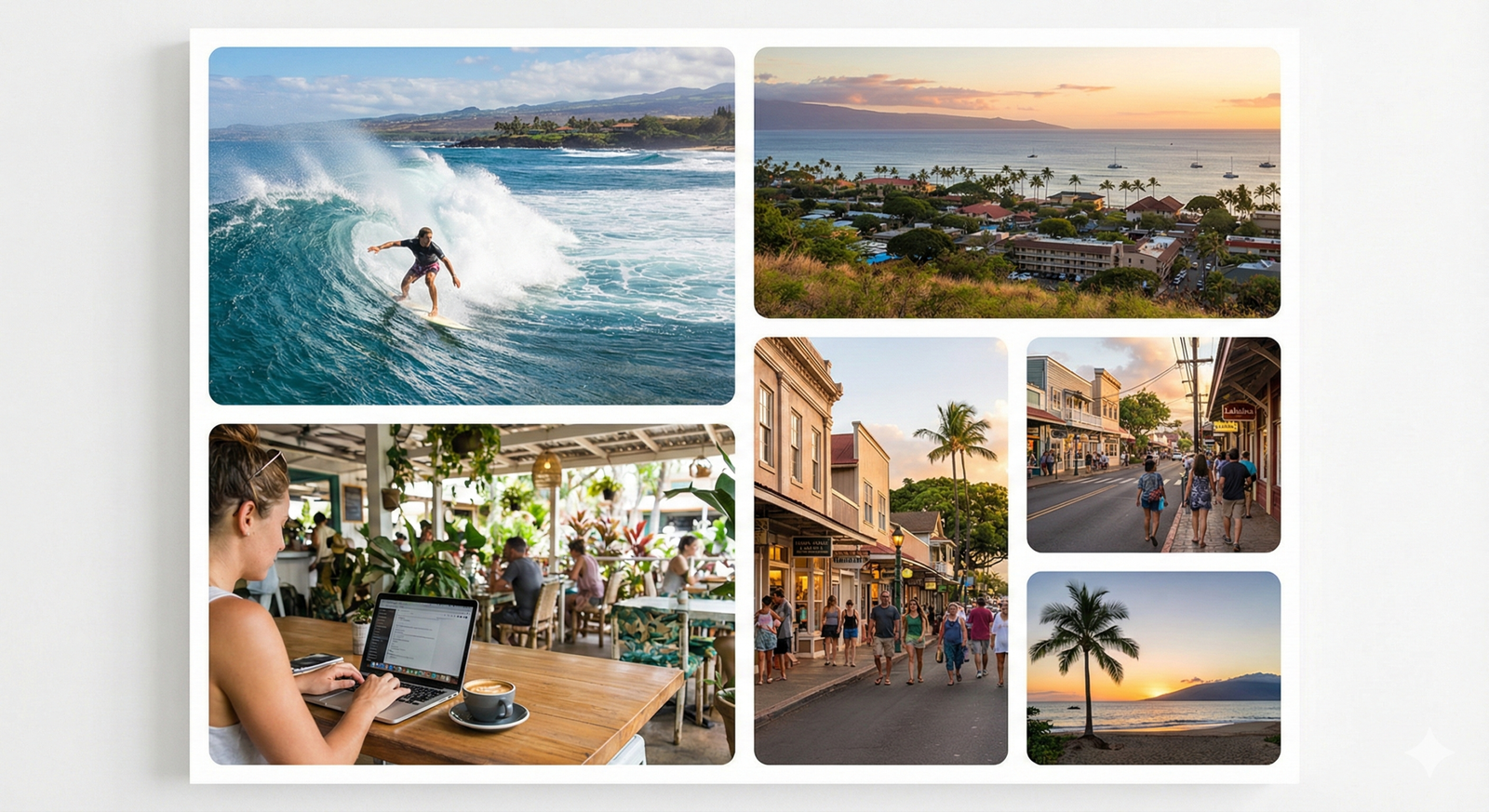
Maui: Lifestyle Premium with Connectivity Homework
Paia’s cafés (like Paia Bay Coffee Bar) and Kihei’s beachside Airbnbs attract nomads chasing the “work in flip-flops” dream, but you must verify WiFi before committing. Tax Hackers flags Kihei and Wailuku rentals with fiber, but Nomad List doesn’t even list Maui separately—lumping it under “Hawaii” at $6,537/month suggests it mirrors Honolulu costs without the infrastructure payoff. Nomads Embassy rates Northshore Hostel Maui 9/10 for workspace quality, a rare gem.
Maui Strengths:
- Paia cafés double as coworking; Haleakalā sunrise hikes recharge creativity
- Less crowded than Waikīkī while still offering Whole Foods/Target in Kahului
- Strong Airbnb scene with $2,000+ monthly discounts in Kihei and Wailuku
Maui Tradeoffs:
- Coworking thin outside Paia; you’re reliant on Airbnb WiFi testing (ask hosts for speed tests)
- Car mandatory—airport to Kihei costs $40 Uber, then you’ll need wheels for variety
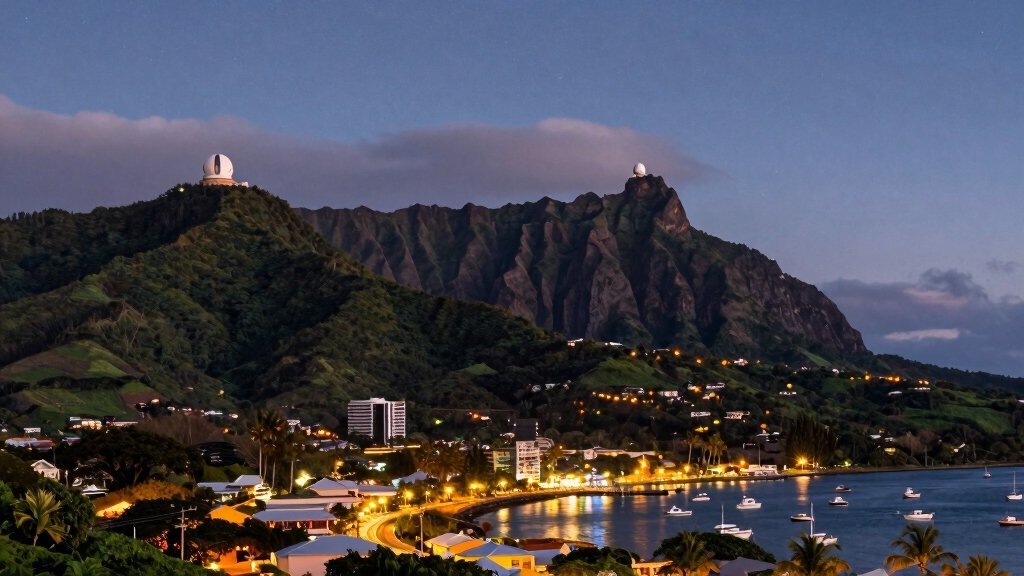
Big Island: Space and Nature with Town-Hub Anchors
Kailua-Kona and Hilo provide workable town infrastructure—Kona has cafés in Kona Commons, and Hilo offers quieter vibes—while volcano hikes and Mauna Kea stargaze sessions deliver the “rejuvenation” nomads crave. Reddit warns rural Big Island hits DSL-only zones, but Hamakua Guest House (Nomads Embassy pick) includes ocean-view workspaces in a less-touristy setting. Expect Big Island to cost slightly less than Oʻahu (fewer Airbnb premiums), though data is scarce.
Big Island Strengths:
- Most space per dollar; vanlife viable in certain zones (check local crackdowns)
- Kona and Hilo anchor reliable internet pockets; less dense than Honolulu
- Volcano National Park, Mauna Kea, and snorkeling at Kealakekua Bay within reach
Big Island Tradeoffs:
- Coworking nearly non-existent; you’re DIY-ing with Airbnbs and cafés
- Two-island feel (Kona vs. Hilo) means picking a side; 2.5-hour drive between them
- DSL risk outside towns—vet your rental’s ISP before booking
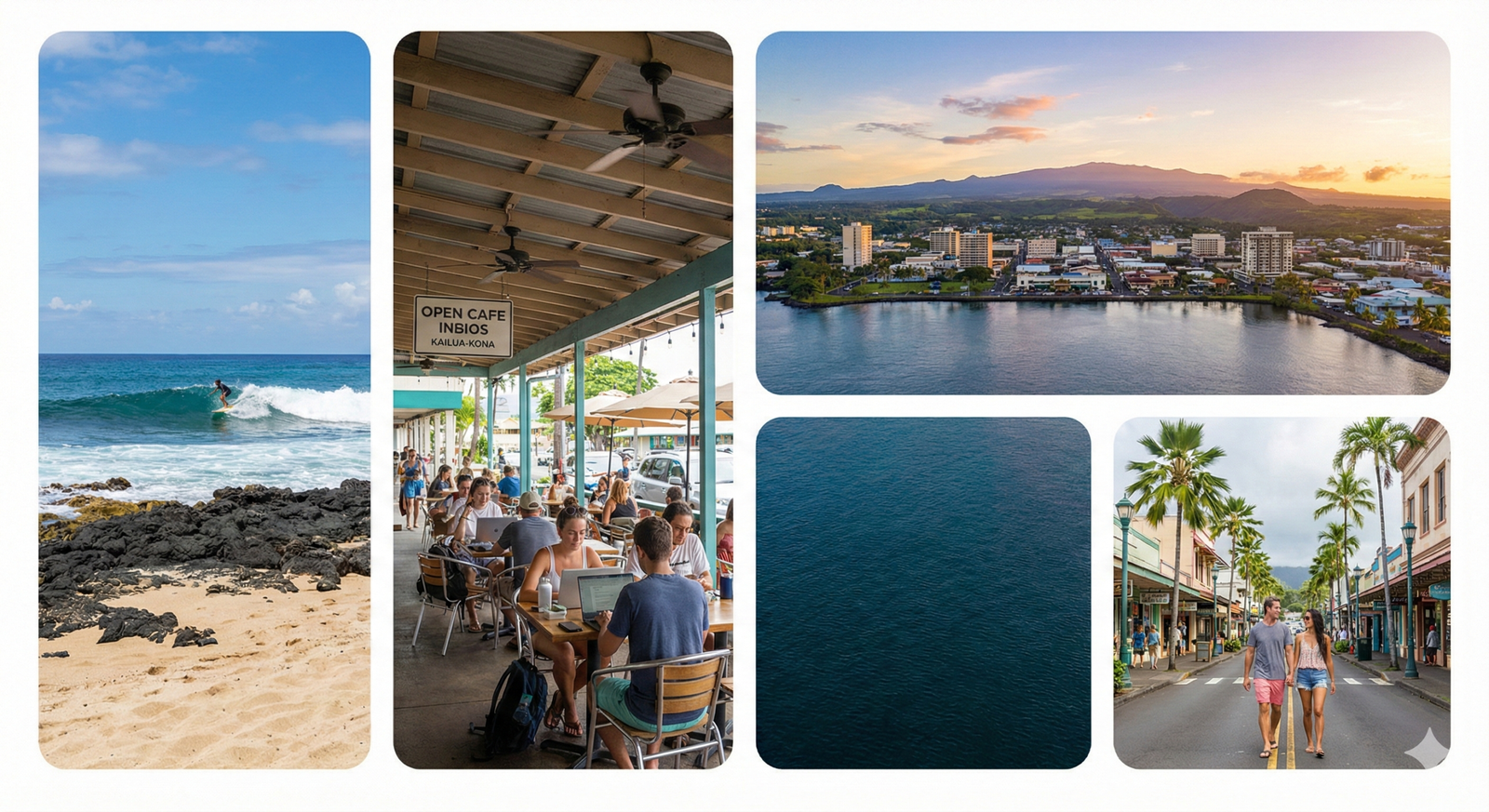
Kauaʻi: Quiet Focus If Connectivity Checks Out
Nomad List pegs Kauaʻi at $8,449/month with 39 Mbps—the priciest and slowest combo, yet some nomads swear by Līhuʻe and Kapaʻa for distraction-free deep work. Hanalei Bread Co. and local cafés offer backup WiFi, but you’re betting on your Airbnb’s connection holding steady. The Garden Isle rewards those who nail the logistics homework with epic Na Pali hikes and empty beaches post-deadline.
Kauaʻi Strengths:
- Lowest nomad saturation = authentic island pace and minimal coworking competition
- Nature overload: Waimea Canyon, Na Pali Coast, Hanalei Bay snorkeling
- Quieter for introverts who don’t need meetup culture
Kauaʻi Tradeoffs:
- Highest cost ($8,449/month) with weakest infrastructure (39 Mbps average)
- Almost zero coworking; you’re locked into Airbnb quality
- Car essential—walkability non-existent outside Kapaʻa town center
Best Places to Base Yourself (Town-by-Town Breakdown)
Now let’s get tactical: which neighborhoods and towns actually work for 2-week to 6-month remote stints, and what should you verify before booking?
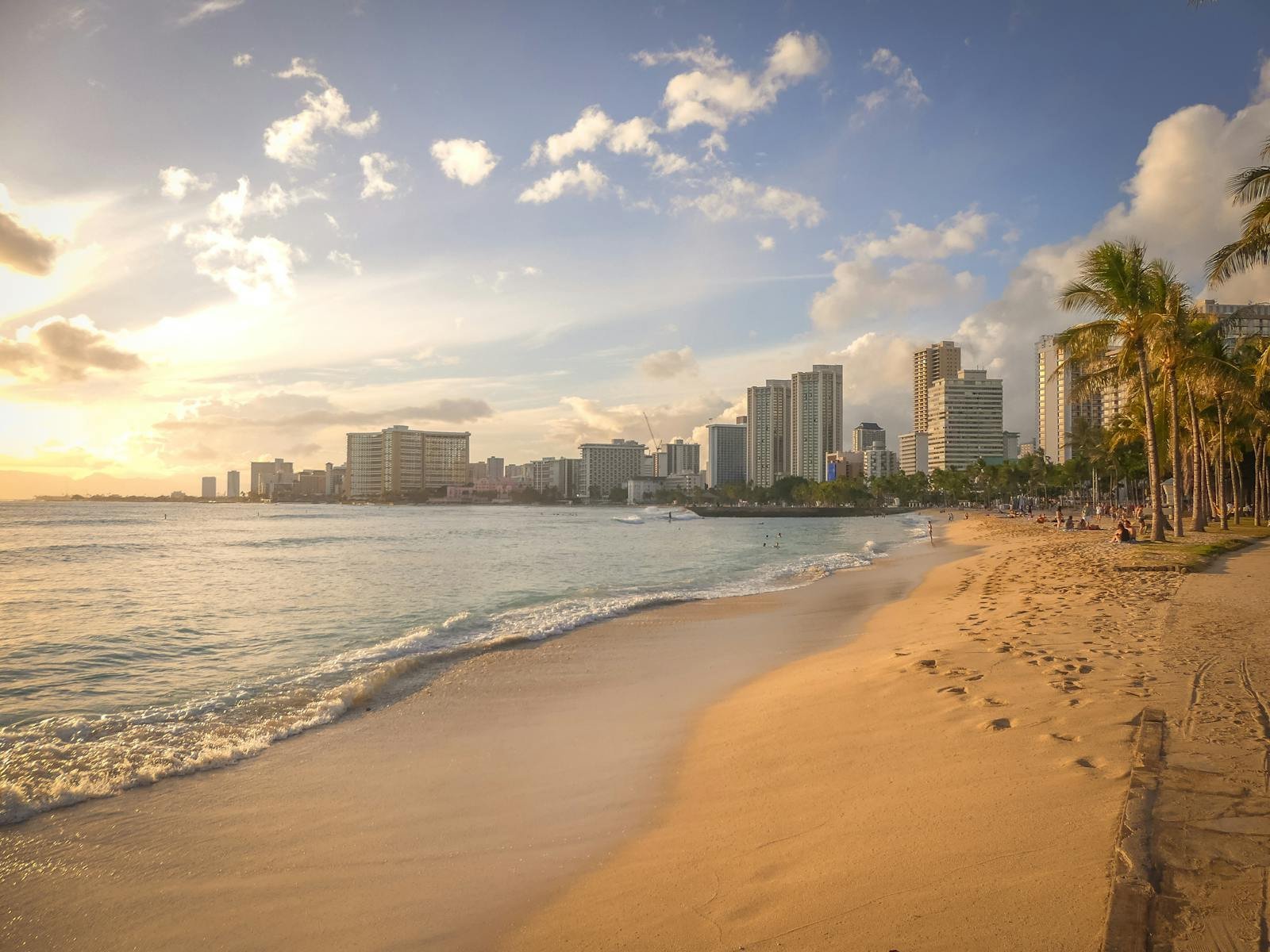
Honolulu/Kakaʻako (Oʻahu): The Coworking Capital
Kakaʻako and Downtown Honolulu anchor Hawaii’s densest coworking cluster—Hub Coworking Hawaii charges $583+/month for private offices with 1GB fiber and backup power, while BoxJelly offers hot desks near Ward Village’s Whole Foods. Nomadlio rates Honolulu 296 Mbps in top spots, though the city average hovers at 48 Mbps. Reddit nomads call this the “no-brainer” base for routine and calls, with Ala Moana Beach Park providing free sunset “office” views.
What to Book:
- Airbnbs in Kakaʻako (near Ward) or Downtown with Ethernet jacks; ask hosts for speed tests
- Hub Coworking or BoxJelly day passes ($25–35) as backup when your rental flakes
- Verify unit noise: avoid Ala Moana Blvd-facing units (traffic hum) and test AC decibels
Lifestyle Perks:
- Walkable to groceries (Whole Foods, Foodland Farms), cafés, and Ala Moana Center
- WhatsApp nomad groups via Outsite and BoxJelly for networking
- 15-min drive to North Shore surf or Windward Coast hikes on weekends
Tradeoffs:
- Urban density = parking hassles if you rent a car (street parking tight)
- Less “island escape” vibe than neighbor islands
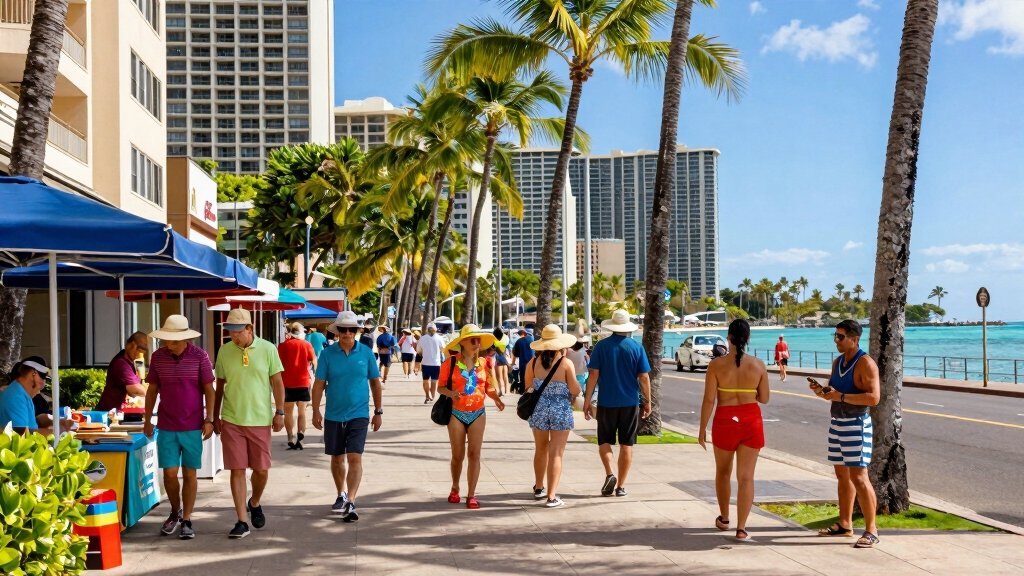
Waikīkī/Ala Moana (Oʻahu): Walkability Central with Tourist Crowds
Waikīkī’s condo towers pack fast WiFi (many hit 100+ Mbps) and walkable access to cafés like Kona Coffee Purveyors, but you’ll swim through tourist throngs and pay $3,000+/month for decent units. Ala Moana sits one neighborhood west—quieter, with Ala Moana Beach Park’s Magic Island offering a free outdoor workspace alternative. If you value no-car living and daily beach dips, this works despite the scene.
What to Book:
- High-floor condos (20th+) to escape street noise; prioritize units with dedicated desks
- Test AC noise levels before committing (window units can wreck calls)
- Backup plan: The Box Jelly coworking or Island Brew Coffeehouse in Ala Moana
Lifestyle Perks:
- Walk to Waikīkī Beach, Diamond Head hike trailhead, and dozens of restaurants
- No car needed—TheBus covers Honolulu routes for $3/ride
- Grocery delivery via Safeway/Whole Foods smooths provisioning
Tradeoffs:
- Tourist saturation (especially Kalākaua Avenue) can feel draining long-term
- Higher costs than North Shore or neighbor islands

North Shore (Oʻahu): Surf-Then-Work Paradise with Logistics
Outsite’s Sunset Beach coliving ($1,500–2,000/month) anchors the North Shore nomad scene, blending coworking desks with direct surf access and tight community via WhatsApp groups. Digital Nomads World flags Windward Coast (nearby) and North Shore as top picks for nomads wanting “strong community” and nature, but you’ll need a car and tolerance for 45-min drives to Honolulu coworking backups. Internet reliability varies—ask Outsite or Airbnb hosts for upload speed tests before locking in.
What to Book:
- Outsite Sunset Beach for plug-and-play setup (coworking + housing + community included)
- Independent Airbnbs in Haleʻiwa or Pūpūkea if you want more space; verify fiber vs. DSL
- Day pass at Outsite ($35–50) if you’re staying elsewhere but want the network
Lifestyle Perks:
- Morning surf at Sunset Beach, Banzai Pipeline, or Waimea Bay before work
- Laid-back vibe with food trucks (Giovanni’s Shrimp, Haleiwa Joe’s) and açaí bowls
- Weekend hikes to Waimea Falls or Kaʻena Point
Tradeoffs:
- Car mandatory—$40+ daily rental or $800/month lease; parking easier than Waikīkī
- 45–60 min to Honolulu coworking if your Airbnb WiFi fails
- Rainy winters (Nov–March) can stall outdoor plans
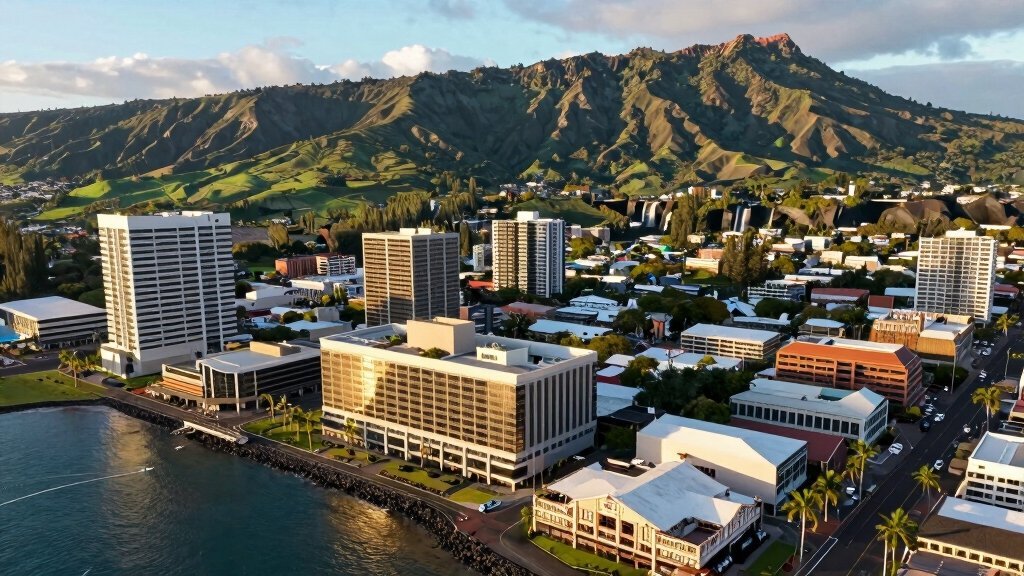
Big Island: Kailua-Kona and Hilo as Work Hubs
Kona (west side) attracts more nomads with its cafés like Island Lava Java and proximity to snorkel spots, while Hilo (east) offers cheaper rent and rainforest access at the cost of more rain. Reddit warns rural Big Island defaults to DSL, but Kona town and Hilo proper generally hit cable speeds (verify with hosts). Nomads Embassy highlights Hamakua Guest House for ocean-view workspaces, though formal coworking barely exists—you’re DIY-ing via Airbnbs and cafés.
What to Book (Kona):
- Airbnbs in Kailua-Kona town or Keauhou with verified fiber (ask ISP: Spectrum vs. Hawaiian Telcom DSL)
- Backup cafés: Island Lava Java, Kona Commons Starbucks for upload-heavy days
- Airport Uber to Kona: $40–50, 45 minutes
What to Book (Hilo):
- Downtown Hilo Airbnbs near Hilo Bay; cheaper ($1,500–2,500/month) but wetter (200+ rain days/year)
- Cafés like Hilo Bay Café or Abundant Life Natural Foods co-op for WiFi backup
- Airport Uber to Hilo: $25–30, 15 minutes
Lifestyle Perks:
- Volcano National Park day trips, Mauna Kea stargazing, and Kealakekua Bay snorkeling
- Most space per dollar—vanlife viable in certain zones (check county regs)
- Lower tourist density than Oʻahu or Maui
Tradeoffs:
- Zero formal coworking; you rely entirely on Airbnb + café quality
- Two-island dynamic: Kona sunny/touristy, Hilo rainy/local; pick your side
- DSL trap in rural areas (Waimea, Volcano village)—vet before booking
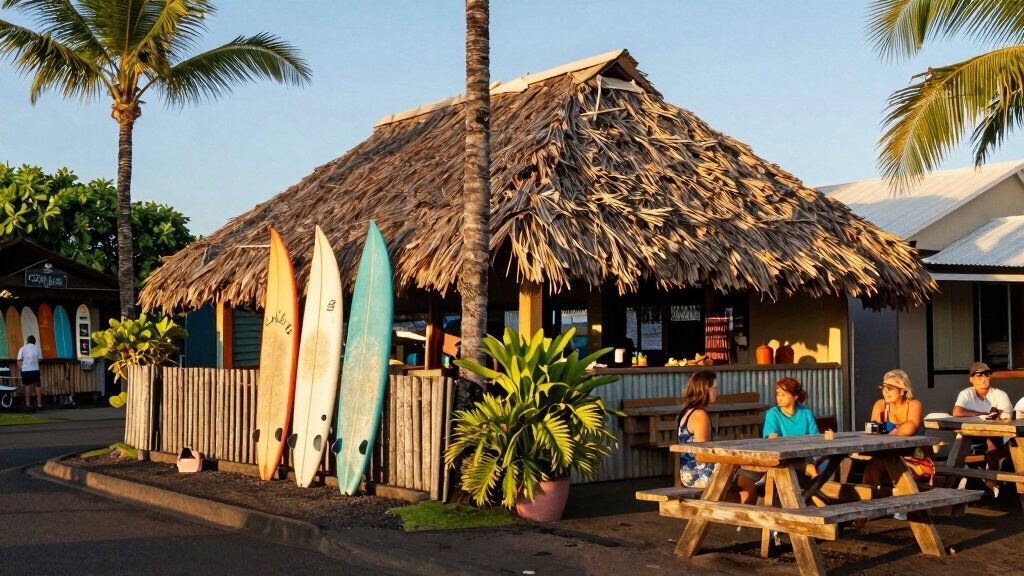
Maui: Paia, Kihei, and the Connectivity Verification Checklist
Paia (north shore) draws nomads to its surf-town cafés like Paia Bay Coffee Bar and proximity to Hoʻokipa Beach, while Kihei (south) offers calmer waters and Airbnb density with $2,000+ monthly rates. Tax Hackers flags Wailuku (central) as a fiber pocket with lower costs, though it’s less beachy. Maui lacks Oʻahu’s coworking safety net, so your Airbnb WiFi is your lifeline—use this checklist before committing.
Pre-Booking Connectivity Checklist:
- Ask host for ISP name (Spectrum fiber ideal; Hawaiian Telcom DSL risky)
- Request screenshot of speed test showing 25+ Mbps upload
- Confirm Ethernet port availability (WiFi alone can flake during storms)
- Identify backup café within 10 min (Paia Bay Coffee, Kihei’s Java Café)
- Check host cancellation policy—Hawaii WiFi failures spike during Kona storms
What to Book:
- Paia Airbnbs for surf + work vibe; Northshore Hostel Maui (9/10 rating) if budget-conscious
- Kihei condos (near Kamaʻole Beach Parks) for calmer waters and Safeway proximity
- Wailuku if you prioritize fiber reliability over beach frontage
Lifestyle Perks:
- Haleakalā sunrise crater hikes, Road to Hana adventure days
- Paia’s surf culture + health food scene (Mana Foods co-op)
- Less dense than Waikīkī but more services than Kauaʻi
Tradeoffs:
- Car mandatory—airport (Kahului) to Paia/Kihei $30–40 Uber, then you need rentals
- No coworking backup outside Paia cafés—connectivity gamble higher than Oʻahu
- Monthly costs rival Honolulu ($2,000–3,000) without infrastructure perks
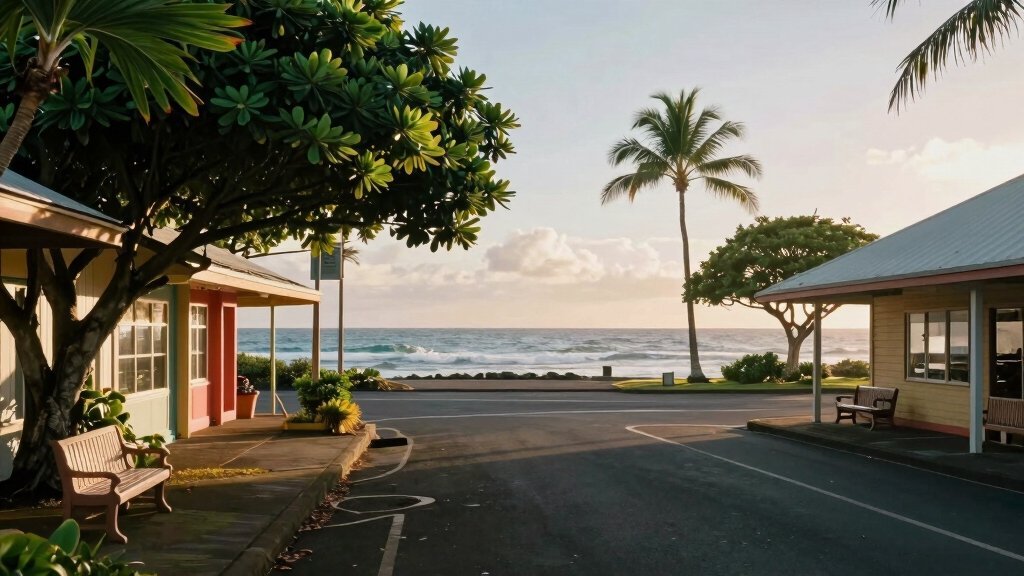
Kauaʻi: Līhuʻe and Kapaʻa for Quiet Deep Work
Nomad List’s $8,449/month price tag and 39 Mbps average scare off most nomads, but Līhuʻe (near airport) and Kapaʻa (east shore) offer pockets of reliability if you nail your Airbnb homework. Hanalei (north) tempts with postcard beauty but connectivity drops further—treat it as a weekend escape base, not a work hub. Kauaʻi rewards introverts seeking distraction-free deep work, provided you accept the “verify everything twice” logistics burden.
What to Book:
- Līhuʻe or Kapaʻa Airbnbs with verified fiber (rare; most are cable at 50–100 Mbps)
- Backup cafés: Hanalei Bread Co. (north shore), Small Town Coffee (Kapaʻa) for upload days
- Airport proximity: Līhuʻe Airbnbs save $30+ Ubers vs. Hanalei ($70–90)
Lifestyle Perks:
- Waimea Canyon (“Grand Canyon of the Pacific”), Na Pali Coast boat tours
- Empty beaches (Poʻipū, Hanalei Bay) and zero coworking competition
- Smallest nomad footprint = most authentic “local” experience
Tradeoffs:
- Highest cost ($8,449/month) with worst infrastructure (39 Mbps average, zero coworking)
- Car essential—no walkable town centers outside Kapaʻa’s 3-block strip
- Isolation can wear on extroverts; minimal nomad community
Island Comparison: Scoring the Big Four
Here’s the framework applied—use this to weight your priorities and pick your base.
| Island | Work Infrastructure | Community | Cost Control | Nature Access | Transportation | Best For |
| Oʻahu | 5/5 | 4/5 | 3/5 | 3/5 | 4/5 | Coworking priority, calls-heavy work, nomad networking |
| Maui | 2/5 | 2/5 | 2/5 | 5/5 | 2/5 | Lifestyle-first if WiFi verified, surf + hike balance |
| Big Island | 2/5 | 1/5 | 4/5 | 5/5 | 2/5 | Space + nature, budget-conscious, vanlife potential |
| Kauaʻi | 1/5 | 1/5 | 2/5 | 5/5 | 1/5 | Quiet deep work, introverts, distraction-free focus |
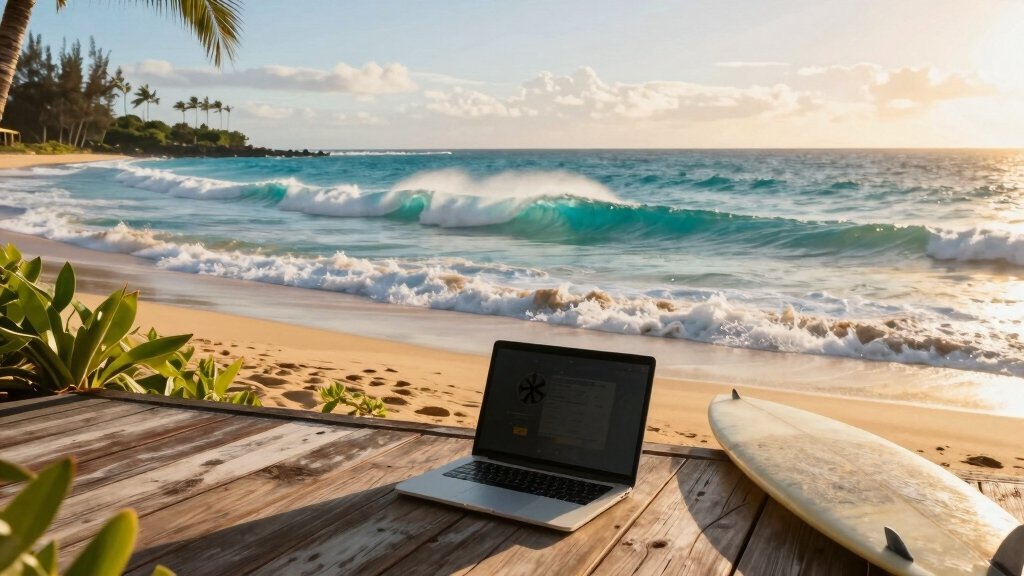
Final Picks: Where You Should Actually Base Yourself
After pulling Reddit threads, Nomad List stats, and real nomad reports, here’s the honest verdict by use case.
Best Overall: Honolulu (Oʻahu)
If reliability trumps all—daily calls, upload-heavy work, zero connectivity gambling—Honolulu’s Kakaʻako and Downtown win. Hub Coworking’s 1GB fiber with backup power ($583+/month) plus walkable Ala Moana infrastructure justify the $6,537/month average. You’ll sacrifice some “remote island” mystique but gain peace of mind and the largest nomad community.
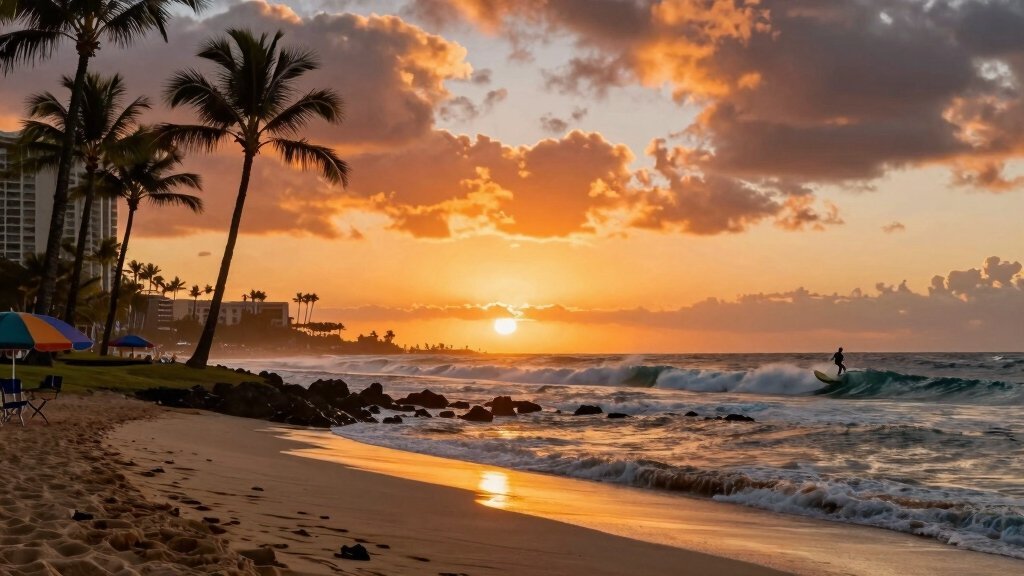
Best for Surf + Work Balance: North Shore (Oʻahu)
Outsite Sunset Beach nails the “morning waves, afternoon Zoom” rhythm with coworking desks, tight WhatsApp groups, and direct surf access for $1,500–2,000/month. You need a car and tolerance for 45-min Honolulu backup trips, but the lifestyle payoff beats tourist-heavy Waikīkī.
Best for Space and Nature: Big Island (Kona or Hilo)
Kailua-Kona delivers town infrastructure (cafés, Spectrum fiber in select zones) with volcano hikes and snorkeling within 30 minutes, while Hilo trades sun for cheaper rent ($1,500–2,500/month) and rainforest access. Expect DIY coworking (Airbnb + cafés), but you’ll gain the most space per dollar and lowest tourist density.
Best for Quiet Focus: Kauaʻi (Līhuʻe/Kapaʻa)
If you’re chasing distraction-free deep work and don’t need nomad meetups, Kapaʻa’s small-town vibe and empty beaches reward the connectivity homework. Budget $8,449/month, verify fiber with hosts twice, and queue Hanalei Bread Co. as your café backup—then enjoy Na Pali hikes and zero coworking competition.

Best Budget Hack: Big Island Vanlife (with Town Anchors)
Rent a camper van ($800–1,200/month) and rotate between Kona and Hilo town parking (check county regs), using cafés for uploads and Airbnb day rates for shower/laundry. You’ll cut housing costs 40%+ while maximizing volcano and beach access, though logistics get heParadise sells itself—but paradise with reliable Zoom calls, upload speeds over 25 Mbps, and a decent coworking desk? That’s harder to find across Hawaii’s islands. If you’re planning a remote work stint in Hawaii, you’ve probably spotted the disconnect: Oʻahu dominates for consistent internet and coworking infrastructure (Honolulu averages 48 Mbps with spots hitting 296 Mbps), while Maui, Big Island, and Kauaʻi win on slower-paced vibes and nature—but demand extra homework on connectivity.
I’ve pulled together real nomad experiences from Reddit threads, Nomad List data, and local Hawaii forums to answer the question honestly: where should you actually base yourself to work remotely in Hawaii? You’ll get a clear “best overall” (spoiler: Honolulu if reliability matters), plus “best for” breakdowns—whether you’re chasing surf-then-cowork mornings on North Shore, quiet focus on Kauaʻi, or Big Island’s space without sacrificing town hubs.

Your Turn: Drop Your Work Specs for a Custom Pick
Every nomad’s “best” depends on call frequency, upload needs, and budget. Comment below with:
- Daily call load (0–2 hrs light; 2–5 hrs heavy; 5+ hrs constant)
- Required upload speed (10 Mbps basic; 25 Mbps video; 50+ Mbps streaming)
- Monthly budget (sub-$3K tight; $3–5K comfortable; $5K+ flexible)
- Vibe priority (coworking community / surf access / quiet nature / walkable urban)
I’ll recommend a specific base (Kakaʻako, North Shore, Kona, Kapaʻa) plus coworking or café backups tailored to your setup. Hawaii’s workable for nomads—you just need to match island infrastructure to your job’s demands.