
I’ve spent the last three months working remotely from Oahu, and I’m convinced it’s one of the most underrated digital nomad destinations in the U.S. Between morning surf sessions and afternoon client calls, I’ve discovered the perfect balance of productivity and paradise. The island offers surprising benefits for remote workers, but it also presents unique challenges you’ll need to navigate. Want to know if Oahu is your ideal workation spot?
Why Digital Nomad in Oahu

While many digital nomads flock to Bali or Chiang Mai, I’ve found Oahu to be an underrated paradise for remote workers seeking the perfect blend of adventure and productivity.
The island delivers reliable high-speed internet in most areas, with coworking spaces popping up in Honolulu and beyond.
What truly sets Oahu apart is the lifestyle balance. I can wrap up client calls, then hit world-class beaches within minutes.
The diverse community includes locals, tourists, military personnel, and fellow nomads—creating networking opportunities you won’t find elsewhere.
Yes, Hawaii has higher costs than Southeast Asia, but the tradeoff is worth it: US infrastructure, no visa hassles for Americans, and an outdoor playground that rejuvenates my creativity daily.
The island’s natural beauty becomes your ultimate productivity hack. Additionally, Oʻahu boasts strongest work infrastructure among the Hawaiian islands, making it an optimal choice for digital nomads.
The Pros and Cons of Oahu
Why do so many travelers and digital nomads feel torn about Oahu? After living here for months, I’ve discovered it’s a place of striking contrasts. The island offers incredible opportunities but comes with legitimate challenges worth considering before you commit.
- Paradise with a price tag: Oahu delivers stunning beaches and perfect weather, but housing costs rival major mainland cities, and groceries can shock even seasoned travelers.
- Connection vs. congestion: High-speed internet is widely available, but Honolulu traffic can turn a 5-mile commute into an hour-long ordeal.
- Community opportunities: The island hosts a growing digital nomad community with regular meetups, but the tourist-local divide can make authentic connections challenging if you don’t make genuine efforts.
Best Coworking Spaces in Oahu
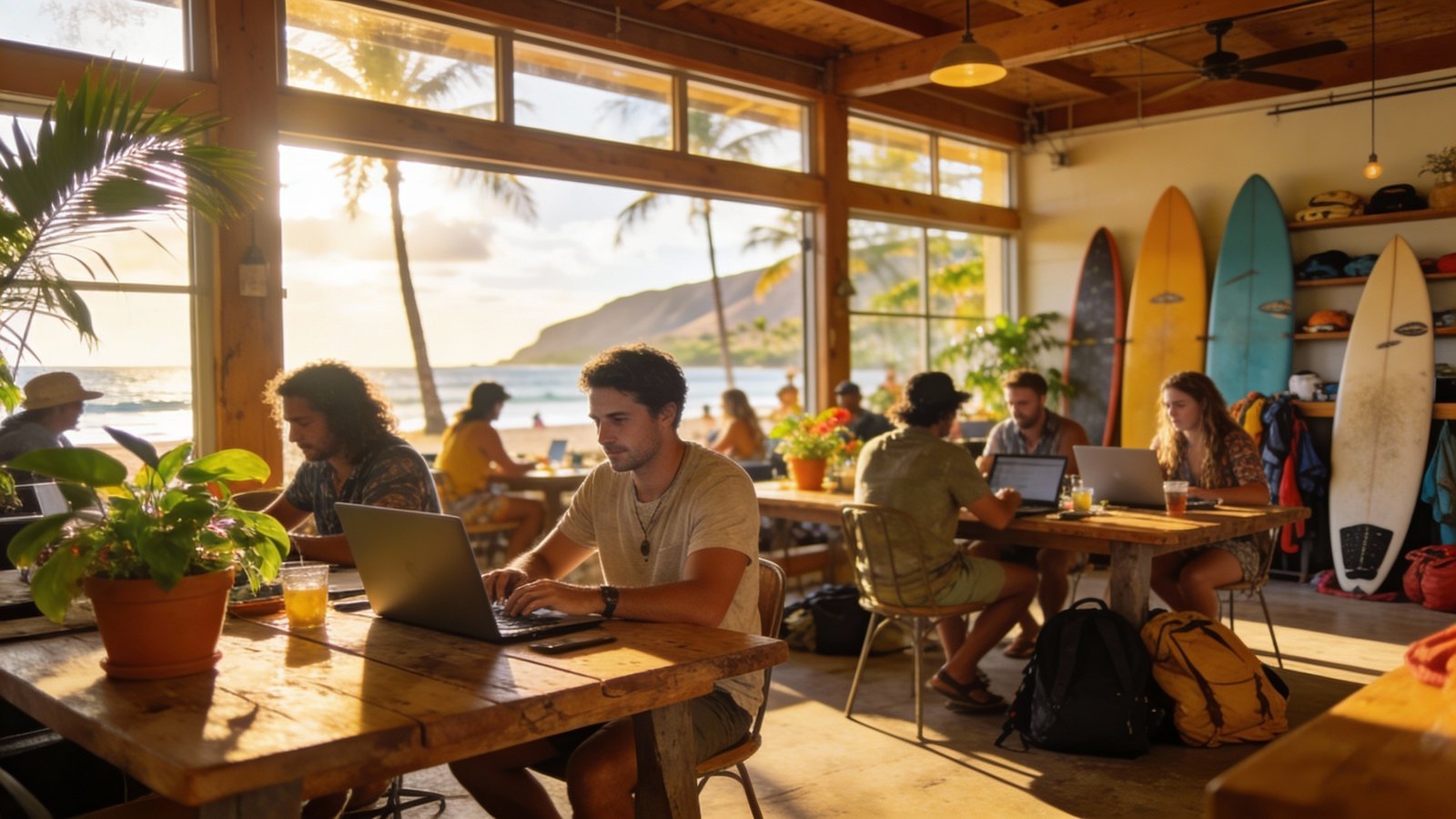
As a digital nomad who’s spent months working remotely from Oahu, I’ve tested dozens of coffee shops to find the perfect work environment.
The island offers an impressive range of cafes with reliable WiFi, ample power outlets, and atmosphere conducive to productivity.
I’ll share my top picks for work-friendly cafes where you can balance productivity with paradise views.
Top Cafes for Working
Since moving my digital nomad setup to Oahu last year, I’ve spent countless hours hunting for the perfect workspace spots that combine strong WiFi, comfortable seating, and decent coffee.
My top café recommendations for getting work done in paradise:
- Morning Glass Coffee in Manoa offers reliable 50Mbps WiFi, ample outlets, and their macadamia nut cold brew kept me productive through countless deadlines.
- Island Brew Coffeehouse in Hawaii Kai features waterfront views that actually boost my creativity, spacious tables, and they don’t mind if you camp out for 4+ hours.
- Brue Bar downtown provides the fastest internet I’ve found (75Mbps), minimalist workspace vibes, and expertly crafted espresso that puts mainland chains to shame.
The Real Cost of Living in Oahu
While many dream of relocating to Hawaii’s stunning shores, the reality of Oahu’s cost of living often comes as a shock to newcomers. During my six-month stay, I tracked every expense to give you an honest breakdown.
| Expense Category | Monthly Average |
|---|---|
| Studio Apartment | $1,700-2,200 |
| Groceries | $500-600 |
| Eating Out | $400-500 |
These prices reflect Honolulu’s urban core—you’ll find slightly better deals in areas like Kailua or the North Shore. Transportation costs add up quickly too, with rental cars averaging $700/month and rideshares being surprisingly expensive. The “paradise tax” is real, but I’ve found the tradeoff worthwhile for ocean sunrises and year-round perfect weather.
Where to Stay in Oahu
Finding decent accommodation in Oahu can feel like hunting for treasure, especially during peak tourist season when availability plummets.
I’ve experienced firsthand how hotels fill up months in advance, while vacation rentals become scarce and markedly pricier from December through March.
If you’re planning an extended stay, I recommend booking at least three months ahead and considering less touristy neighborhoods like Kaimuki or Kaneohe where you’ll find more housing options at better rates.
Housing Availability in Oahu
Where you choose to lay your head in Oahu can dramatically shape your Hawaiian experience. As a digital nomad, I’ve found Oahu’s housing market to be challenging but navigable with the right approach.
Vacation rentals through Airbnb and VRBO are plentiful but pricey, especially during high season (December-April). For stays longer than a month, negotiate directly with hosts—I’ve secured 30-40% discounts this way.
Co-living spaces like The Entrepreneur’s Sandbox in Kakaako offer month-to-month options with built-in workspaces and community.
For budget travelers, hostels in Waikiki provide affordable alternatives.
Remember that North Shore accommodations are limited and book quickly during surf season, while Honolulu offers year-round availability but at premium rates.
What to Pack for Oahu
When planning your Oahu adventure, packing the right gear can make or break your Hawaiian experience.
I’ve found that lightweight, quick-dry clothing is essential – pack shorts, t-shirts, and at least one light sweater for cooler evenings. Don’t forget swimwear, as you’ll likely hit the beach daily.
Reef-safe sunscreen is non-negotiable (and legally required). I always bring a packable day bag for hikes and beach trips, plus a reusable water bottle to stay hydrated.
A good pair of hiking shoes will serve you well for trails like Diamond Head, while water shoes protect against sharp reef.
For digital nomads, I recommend a waterproof phone case and compact power bank – they’ve saved my workday more than once when exploring between calls. Additionally, choosing shoes with durable rubber outsoles ensures they withstand both the beach and hiking trails effectively.
The best spots Oahu to Party, Relax or Unwind

After weeks of exploring Oahu, I’ve found the perfect balance of party spots and peaceful retreats across the island.
For beach lovers, you’ll want to check out Waikiki’s energetic shores, the North Shore’s legendary surf breaks, and the tranquil Lanikai Beach with its powder-soft sand.
When you need a break from the waves, Oahu’s hiking trails—from the iconic Diamond Head Summit to the lush Manoa Falls path—offer breathtaking views that’ll recharge your spirit.
The Best Beaches around Oahu
Though I’ve traveled to dozens of islands across the globe, Oahu’s shorelines remain unmatched in their diversity and beauty.
During my three-month stay as a digital nomad, I discovered beaches perfect for every mood and activity.
For remote workers seeking balance between productivity and paradise, these three beaches stand out:
- Lanikai Beach – Crystal-clear waters with reliable cell coverage. I often worked mornings from my travel hammock between the iconic twin islands.
- Ko Olina Lagoons – Protected waters with nearby cafés offering WiFi. Perfect for afternoon calls with minimal background noise.
- Sunset Beach – North Shore gem with stunning vistas. Come during low surf season if you want to swim while taking breaks from your laptop.

Top Hiking Trails in Oahu
Why settle for just beaches when Oahu’s mountains offer equally breathtaking experiences? As a digital nomad, I’ve found hiking here provides both exercise and stunning backdrops for work breaks.
Diamond Head is the classic choice—a moderate 1.8-mile round trip rewarding you with panoramic island views perfect for those Instagram-worthy remote office shots.
- Manoa Falls Trail – An accessible 1.6-mile round trip through lush rainforest leading to a 150-foot waterfall. Great cell reception makes it workable between calls.
- Koko Crater Railway Trail – 1,048 railway ties creating a challenging stairmaster with unbeatable views. I tackle this before client meetings for energy boosts.
- Lanikai Pillbox – A relatively short hike with minimal elevation offering spectacular sunrise vistas and reliable WiFi from nearby neighborhoods.
Frequently Asked Questions
Let me answer the top questions I’ve received about Oahu that weren’t covered elsewhere in this guide.
You’ll find practical advice about getting connected with local SIMs, understanding Hawaii’s weather patterns, island-hopping transportation, my favorite coworking spots, and staying safe at those gorgeous beaches.
These FAQs come from real digital nomads who’ve reached out after reading TravelEfficiency.
Local SIM Card Options
Since connectivity is essential when exploring Oahu, I’ve compiled answers to the most common questions about local SIM cards.
The three main carriers on the island are T-Mobile, AT&T, and Verizon. I’ve found T-Mobile offers the best coverage for digital nomads, especially in popular spots like Waikiki and Honolulu. Their prepaid tourist plan costs around $50 for 30 days with unlimited data.
AT&T’s prepaid options start at $30 for 5GB, while Verizon’s prepaid plans begin at $40 for 15GB. You can purchase these SIM cards at their respective stores in Ala Moana Center or at Honolulu Airport.
Remember that cell service can be spotty in remote areas like the North Shore, so download offline maps before venturing out.
Weather Year-Round
Beyond staying connected, understanding Oahu’s weather patterns will help you pack appropriately and plan your activities wisely. Oahu enjoys a tropical climate with two main seasons: summer (May-October) with temperatures averaging 85-90°F, and winter (November-April) hovering around 75-83°F.
The island’s windward (eastern) side, including Kailua and Kaneohe, receives more rainfall, while the leeward (western) side stays drier and sunnier. If you’re working remotely, consider that rainy days are more common between November and March, particularly in the mountains and east coast.
I’ve found the shoulder seasons (April-May and September-October) ideal for digital nomads—fewer tourists, pleasant temperatures, and sufficient sunshine for weekend adventures while you work during weekdays.
Transportation Between Islands
One of the most frequent questions I receive from travelers planning an Oahu trip is how to explore Hawaii’s other islands efficiently.
Your best option is flying with Hawaiian Airlines or Southwest, which offer multiple daily inter-island flights ranging from $39-100 each way.
For budget travelers, I recommend booking early and traveling mid-week when fares are lowest.
If you’re island-hopping to Maui, Kauai, or the Big Island, plan for at least 2-3 days per destination since the airport process still takes time.
While ferry service existed historically, there’s currently no passenger ferry system connecting Oahu to other islands.
The only exception is the ferry between Maui and Lanai, which doesn’t help if Oahu is your home base.
Best Coworking Spaces
As a digital nomad who’s spent countless hours working remotely from Oahu, I’ve tested nearly all the island’s coworking spaces to find the perfect productivity spots. Whether you need reliable WiFi or networking opportunities, these are my top recommendations:
| Space | What Makes It Special |
|---|---|
| Treehouse Coworking | Bright, airy space with ocean views and monthly events |
| Impact Hub Honolulu | Diverse community and central downtown location |
| BoxJelly | Established space with flexible hot desk options |
| SALT at Our Kakaʻako | Creative atmosphere with nearby food options |
| The Hub Coworking | Budget-friendly with reliable 24/7 access |
Most spaces offer day passes ($20-30) and weekly rates, but for stays longer than two weeks, I recommend monthly memberships for better value.
Beach Safety Tips
Why do so many visitors underestimate Oahu’s ocean conditions?
I’ve watched countless tourists wade into seemingly calm waters only to be caught in powerful rip currents or surprised by massive shore breaks.
Don’t be one of them.
Always check daily surf reports before heading out.
The North Shore’s winter waves can reach 30+ feet—definitely not beginner-friendly.
Even Sandy’s, Makapu’u, and other East Shore beaches have claimed lives when conditions shift suddenly.
Never swim alone, and choose beaches with lifeguards whenever possible.
Learn to identify rip currents (look for murky water channels or breaks in the wave patterns) and remember to swim parallel to shore if caught in one.
As a digital nomad, your laptop can be replaced—your life cannot.
Summary
I’ve found Oahu to be a digital nomad’s paradise that’s worth every penny despite the higher costs. The blend of reliable infrastructure, breathtaking scenery, and vibrant community creates an unmatched remote work experience. Whether you’re surfing at sunset or networking at local coworking spaces, you’ll discover the perfect work-life balance here. I’m already planning my return to this Hawaiian haven.